Key Takeaways
- Emergency tree removal response time typically ranges from one to four hours locally.
- Trees on houses, cars, or power lines are prioritized ahead of yard debris.
- After regional storms, demand spikes and response can stretch to 24–48 hours.
- Never touch a fallen tree near power lines; call the utility company first.
- Clear photos and an accurate description help crews arrive prepared and work faster.
- Emergency work costs more than scheduled removal, but insurance often covers structural damage cases.

When a tree comes down on your roof, your driveway, or your only route out of the property, the first question is always the same: how fast can someone get here? The honest answer is that emergency tree removal response time depends on three things: what the tree is touching, what the weather just did to your region, and how clearly you communicate the situation when you call.
This guide walks through realistic response windows, what happens between your call and the crew arriving, what emergency work costs compared to scheduled removal, and exactly what to do in the first thirty minutes after a tree falls. It is written for homeowners in the United States, with examples drawn from storm-prone areas like Doylestown, PA and the wider Bucks County region, where summer thunderstorms and nor’easters bring down mature trees every year.
What Counts as a Tree Emergency?
Not every fallen tree is an emergency, and tree services triage calls the same way an ER triages patients. Understanding the categories helps you set expectations.
True emergencies get same-day, often same-hour dispatch:
- A tree or large limb on a house, garage, or vehicle
- A tree blocking a driveway, road, or emergency access
- A tree leaning on or tangled in power lines (utility company responds first)
- A hazardous tree that is cracked, uprooted, or actively falling toward a structure
Urgent but not immediate situations are usually handled within 24–48 hours:
- A tree down in the yard with no structure involved
- Large hanging limbs (“widow-makers”) over walkways
- A leaning tree after saturated-soil conditions
Routine work is scheduled days or weeks out: stump grinding, pruning, and removal of dead-but-stable trees.
If you call about storm damage tree removal in Doylestown PA the morning after a derecho, honesty about your category helps everyone. A tree on your lawn will wait; a tree on your kitchen will not.
Typical Emergency Tree Removal Response Times
| Situation | Typical Response Time | Why |
|---|---|---|
| Tree on house or car, normal weather | 1–4 hours | Highest priority; crews dispatched immediately |
| Tree blocking driveway or road | 2–6 hours | High priority; access and safety issue |
| Tree on power lines | Utility first, then tree crew | Line must be de-energized before any cutting |
| Fallen tree in yard, no structure | 24–48 hours | Not hazardous; slotted between emergencies |
| Region-wide storm event | 4–48+ hours even for emergencies | Every crew in the county is booked; triage applies |
| Overnight or holiday emergency | 2–8 hours | Depends on whether the company runs a true 24 hour tree removal line |
These windows reflect how established local companies operate under normal staffing. The Tree Care Industry Association (TCIA) notes that accredited companies maintain emergency protocols precisely because storm work is the most dangerous work in the trade, and rushing it causes injuries.
What to Do in the First 30 Minutes: Step by Step
- Get everyone away from the tree. Fallen trees are under tension and can shift without warning. Keep people and pets out of the room directly under any roof impact.
- Check for power lines. If any wire is touching the tree or the ground, stay back at least 30 feet and call your utility company before anyone else. Treat every line as live.
- Call 911 only if there is injury, fire, or a gas smell. Otherwise, skip straight to step four.
- Call a local emergency tree cutting service. Bucks County and similar areas have multiple companies with after-hours lines. Say clearly: what the tree is on, roughly how big it is, and whether wires are involved.
- Take photos from a safe distance. You need them for insurance, and the crew uses them to bring the right equipment (crane, bucket truck, or just saws and a chipper).
- Cover interior damage if it is safe. A tarp over broken windows or a punctured roof section limits water damage while you wait, but never climb onto a damaged roof.
- Call your insurance company. For tree on house removal in Bucks County and elsewhere, homeowners policies commonly cover removal when the tree damages a covered structure. Document everything before cleanup begins.
Why Response Time Varies So Much
Regional storm load
The single biggest factor is whether your emergency is isolated or shared. On a calm Tuesday, a tree on your roof might be the only emergency call in the county, and a crew can be there in an hour. After a named storm, hundreds of homeowners need fallen tree removal in Doylestown and every surrounding township at once. FEMA’s homeowner guidance after severe storms consistently emphasizes patience and safety during this period because contractor demand outstrips supply for days.
If a major storm just passed through your whole region, expect triage: structures first, access second, yards last. If your tree fell on a clear day, expect fast service and possibly same day tree removal even for non-structural situations.
Equipment requirements
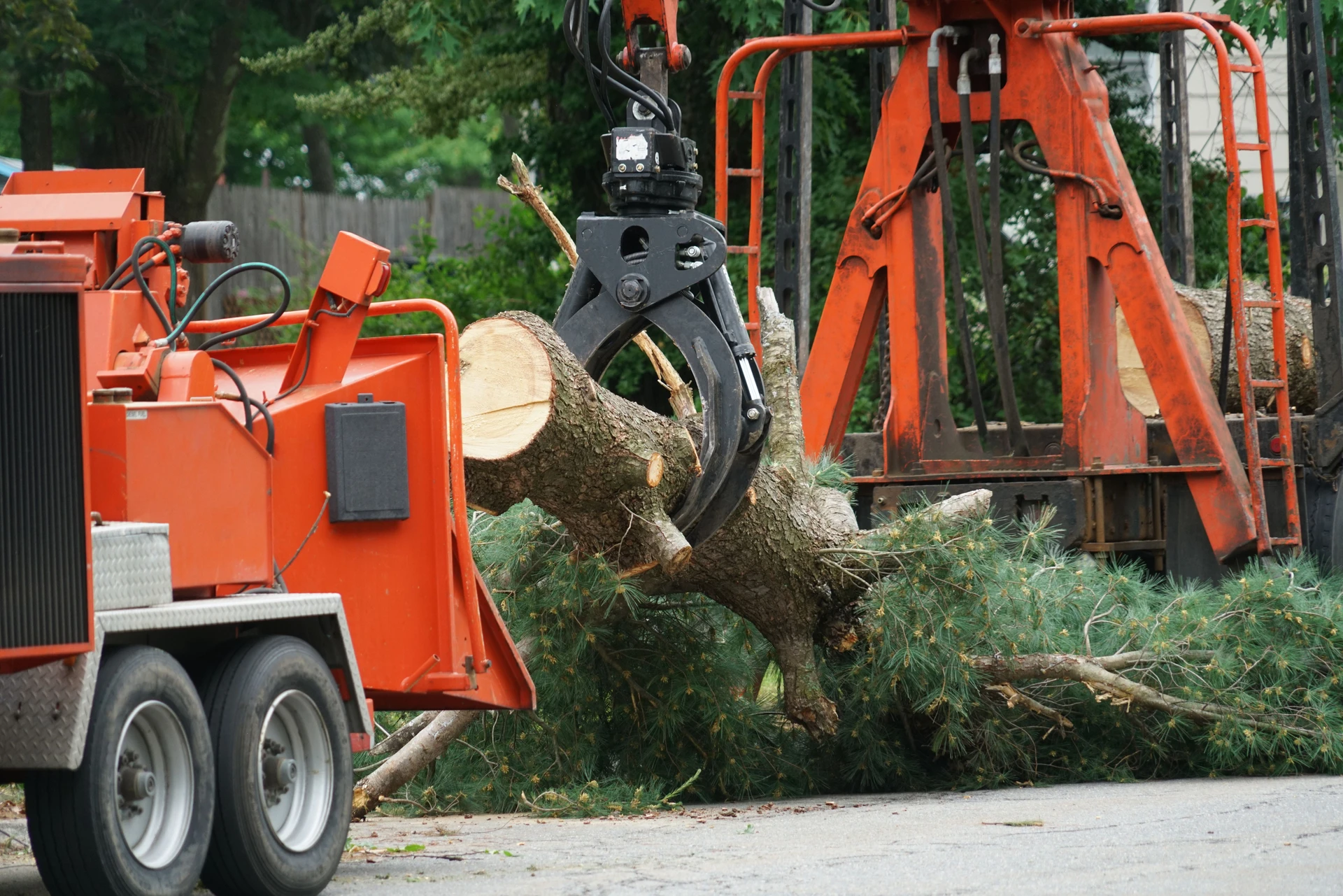
A 12-inch maple across a driveway needs a two-person crew and a chipper. A 30-inch oak resting on a roof ridge often needs a crane, and crane scheduling can add hours. Companies that ask detailed questions on the phone are not stalling; they are making sure the first trip is the only trip.
Time of day and staffing
Companies advertising 24 hour tree removal genuinely answer at 2 a.m., but overnight response usually means securing and stabilizing the scene, with full removal at first light. Chainsaw and crane work in darkness multiplies risk, and OSHA guidance on tree care operations treats storm-damaged trees as elevated-hazard work even in daylight.
Waiting vs. Calling for Emergency Service: Pros and Cons
Calling emergency (after-hours) service
Pros:
- Immediate protection of your home from further damage
- Faster insurance documentation and claim start
- Hazard is controlled by trained crews, not left overnight
Cons:
- Emergency rates run meaningfully higher than scheduled work
- After a storm, you may pay emergency rates and still wait
- Overnight visits sometimes stabilize rather than fully remove
Waiting for a scheduled slot
Pros:
- Standard pricing, often 30–50% lower than emergency callout
- Crew arrives fully equipped in daylight with no rush
Cons:
- Ongoing water intrusion if the tree breached the roof
- A shifted tree can cause a second round of damage
- Liability exposure if the tree blocks a shared access or sidewalk
The conditional logic is straightforward: if the tree is touching a structure, vehicle, or access route, call now and pay the emergency rate. If it is lying harmlessly in the yard, book a scheduled hazardous tree removal and save the difference.
Do / Don’t Checklist
Do:
- Do photograph everything before any cutting begins
- Do ask on the phone whether the company carries liability insurance and workers’ comp
- Do ask for a rough arrival window and a callback number
- Do shut off power to affected rooms if water is entering near fixtures
Don’t:
- Don’t cut anything yourself; storm-damaged wood is loaded with tension
- Don’t let a door-knocking “storm chaser” start work without a written estimate and proof of insurance
- Don’t climb on the roof or the trunk to inspect damage
- Don’t assume a quiet tree is a stable tree; root plates can settle for days
What Does Emergency Tree Removal Cost?
Exact pricing depends on tree size, location, equipment, and timing, so no honest company quotes a fixed number sight unseen. As general phrasing industry-wide: emergency and after-hours work carries a premium over scheduled removal, crane jobs cost more than ground-accessible jobs, and trees on structures cost more than trees on lawns.
For emergency tree removal cost in Doylestown PA specifically, most homeowners get a verbal range on the phone from photos, then a firm price on arrival. If the tree damaged your home, your insurer typically reimburses removal up to policy limits, which is why documentation matters more than shopping three quotes while water runs into your attic.
A Real-World Scenario
A July thunderstorm drops a mature silver maple onto the corner of a two-story colonial outside Doylestown at 9:40 p.m. The homeowner calls a local service at 9:55 with photos ready. Because wires are not involved and the roof is breached, the company dispatches a night crew that arrives at 11:20, tarps the roof opening, and removes the limbs pressing on the ridge. The crane arrives at 7:30 the next morning and the trunk is off the house by 10 a.m. Total elapsed time from call to a safe, tarped home: under two hours. Total time to full removal: about twelve hours, with insurance covering the removal as part of the roof claim.
That timeline, an evening stabilization followed by a first-light crane lift, is what a well-run emergency response usually looks like.
Quick Answers –
How fast can a tree service respond to an emergency?
A: Under normal conditions, one to four hours for trees on structures or blocking access. After regional storms, even emergencies can take 24–48 hours due to demand.
Who do I call when a tree falls on my house?
A: If wires are involved, the utility company first. Otherwise, call an emergency tree service, then your homeowners insurance company. Call 911 only for injuries, fire, or gas odors.
Is a tree on power lines the tree company’s job?
A: No. The utility must de-energize or clear the line first. Tree crews will not touch a tree in contact with live wires.
Does homeowners insurance cover emergency tree removal?
A: Commonly yes, when the tree damages a covered structure like your house, garage, or fence. A tree that falls harmlessly in the yard is often not covered.
Do tree services really operate 24/7?
A: Many do for true emergencies. Overnight response often means stabilizing the scene, with full removal completed in daylight for safety.
How much more does emergency removal cost?
A: Emergency and after-hours work carries a premium over scheduled removal. The exact difference varies by company, tree size, and equipment needed.
Can I cut the tree myself to save time?
A: No. Storm-damaged trees hold enormous stored tension, and chainsaw injuries spike after storms. Leave cutting to insured professionals.
What information should I give when I call?
A: What the tree is on, its rough diameter, whether wires are involved, and your access situation. Photos sent by text speed everything up.
Glossary of Terms
Widow-maker: A broken or hanging limb caught in a tree’s canopy that can fall without warning. These are treated as urgent hazards.
Root plate: The disc of roots and soil that lifts out of the ground when a tree uproots. A tilted root plate means the tree is unstable.
Crane removal: Lifting tree sections off a structure with a crane instead of cutting them down piece by piece. Standard practice for trees on roofs.
Triage: The process of ranking emergency calls by hazard severity, so trees on homes are handled before trees on lawns.

Conclusion
Emergency tree removal response time is fastest when the hazard is real, the region is calm, and your call is specific. Under normal conditions, a tree on your home should have a crew on site within hours, with stabilization first and full removal as soon as daylight and equipment allow. After major storms, triage rules the day, and the homeowners who fare best are the ones who stay off the tree, document everything, and get on a reputable company’s list early.
If a tree has come down on your property in Doylestown or anywhere in Bucks County, don’t wait for the situation to get worse. Call a licensed, insured emergency tree service now, send photos, and let a trained crew make your home safe again, often the very same day.