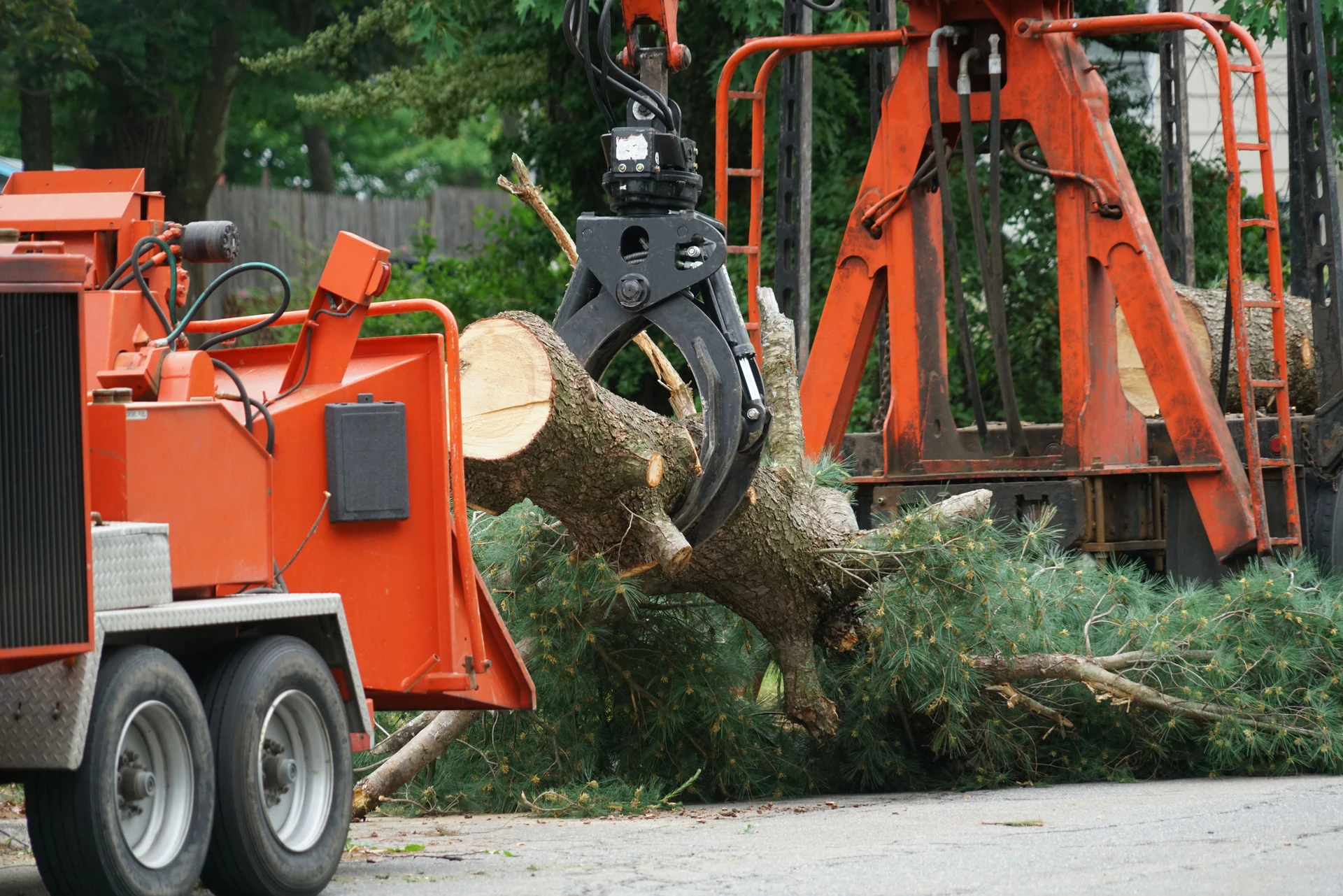
The sound is unmistakable. A crack, a rush, and then a weight settling into your ceiling that was never meant to be there. If you are searching tree fell on my house what to do, you are probably standing outside right now with your phone in your hand, unsure whether to go back in.
This guide walks you through the first five actions in the right order, then covers the two questions that decide how much this actually costs you: what your insurance will pay for, and what emergency tree removal really runs. You will also learn which mistakes quietly wreck a claim before the adjuster ever shows up.

Key Takeaways
- Leave the structure first. Life safety always outranks property damage or cleanup.
- Tree fell on my house what to do next? Call 911, then your insurance carrier.
- Photograph everything before removal so your claim has proof of impact.
- Homeowners insurance usually covers removal only when the tree impacts an insured structure.
- Never cut a tree that is resting on a roof, wires, or a leaning wall.
- A tarp and a written estimate protect you from denied claims later.
The First 5 Things to Do, In Order
Work through these in sequence. Skipping ahead is how people get hurt.
1. Get Everyone Out and Stay Out
Evacuate every person and pet immediately, even if the damage looks minor from inside. A tree that has punched through a roof has transferred load into framing that was not designed to carry it. Ceilings can fail minutes or hours after impact.
Move to a neighbor’s house or your car, well clear of the remaining canopy and any leaning limbs. Do not go back for laptops, documents, or medication until a professional clears the structure.
2. Call 911, Then the Utility Company
Call emergency services if anyone is injured, if you smell gas, if you see sparking, or if a power line is involved. Fire departments handle scene safety and can cut power at the meter.
If a live line is down anywhere near the tree, treat the ground itself as energized and maintain an OSHA-recommended safety distance. Call your electric utility directly, since they own the line and are the only ones who can safely de-energize it.
If you smell gas, do not use your phone near the house. Walk down the street first, then call.
3. Shut Off Utilities Only If It Is Safe
If the panel and gas shutoff are outside and unobstructed, kill the power and gas. If either requires walking under the impact zone, skip it and let the fire department handle it.
Water is the exception worth some effort. A cracked supply line above a ceiling can cause more total damage than the tree did, so shutting the main valve is usually worth doing when it is accessible from outside.
4. Call Your Insurance Carrier and Open a Claim
Call the claims number on your policy card, not your agent’s cell phone, so the timestamp is logged. Ask three specific questions on that first call:
- Does my policy include emergency mitigation or “reasonable repairs” coverage?
- What is my deductible for this type of loss?
- Do I need pre-approval before hiring an emergency tree removal company?
Most carriers expect you to prevent further damage rather than wait for an adjuster. That means tarping is usually encouraged and reimbursable. Confirm it verbally and write down who told you.
5. Document Everything Before Anything Moves
This is the step people rush, and it is the one that costs them. Once the crew starts cutting, the evidence is gone.
Photograph the tree in place from four sides of the property. Capture the point of impact from outside and inside. Shoot wide context photos showing the whole house, then close detail shots of cracked framing, wet drywall, and damaged belongings. Take video while narrating what you see, including the date.
Keep every receipt, including hotel, meals, and the tarp itself. Additional living expenses are often covered when a home is uninhabitable.
Is It Safe to Stay in the House After a Tree Falls?
Usually not, at least not the first night. The honest answer depends on what the tree hit.
Treat the home as unsafe if the tree contacted a load-bearing wall, if any ceiling is sagging or cracked, if you hear creaking, if utilities are compromised, or if you can see daylight through the roof structure. A building inspector or structural engineer makes the final call, and many municipalities will send one after a storm.
If the tree is still resting on the roof, assume the structure is unsafe until a professional says otherwise. A tree that stopped where it is has not finished falling. It has paused.
Does Homeowners Insurance Cover a Tree Falling on Your House?
Standard policies in the United States generally cover damage to your home when a tree falls on it, along with removal of the portion of the tree that is on the insured structure. What trips people up is that coverage follows the damage, not the tree.
The Insurance Information Institute’s guidelines on tree damage are the clearest neutral reference on how these scenarios are typically handled, and your own policy declarations page is the final authority.
Who Pays in Common Scenarios
| Scenario | Who Typically Pays | What Is Usually Covered |
|---|---|---|
| Healthy tree in your yard falls on your house during a storm | Your homeowners policy | Structural repair plus removal from the structure |
| Neighbor’s healthy tree falls on your house | Your homeowners policy | Same as above, minus your deductible |
| Neighbor’s visibly dead or diseased tree falls on your house | Possibly the neighbor’s liability coverage | Depends on documented prior notice of the hazard |
| Tree falls in your yard and hits nothing | Usually nobody | Standard residential tree removal is typically out of pocket |
| Tree falls on your detached garage or fence | Your policy, other structures coverage | Often a lower sub-limit than the dwelling |
| Tree falls on your parked car | Your auto policy, comprehensive only | Not the homeowners policy |
That last row surprises almost everyone. A tree on the roof and a tree on the car in the driveway are two different claims with two different deductibles.
The Neighbor’s Tree Question
If your neighbor’s tree fell on your house, your own insurer handles it first and may later pursue the neighbor’s carrier through subrogation. Negligence is the deciding factor, and it usually requires evidence the neighbor knew the tree was hazardous and did nothing.
If you have ever sent your neighbor a text or letter about a dead tree, find it now. Written notice is what turns a weather event into a liability claim.
What Does This Cost? Repair and Emergency Tree Removal
Costs vary widely by region, tree size, access, and whether crane-assisted removal is needed. Rather than quote figures that will not match your market, here is how estimates are actually built so you can read a quote intelligently.
Emergency tree removal pricing is driven by risk and access, not board feet. A large hardwood over a roof with no yard access for equipment can cost several times what the same tree costs lying flat in an open field. After a regional storm, demand pricing is real.
Repair cost is driven by penetration depth. Surface roof damage is a roofing job. A tree that broke rafters or trusses becomes a framing job, which pulls in engineering, permits, and interior finish work.
Ask every contractor for a written scope that separates emergency stabilization, debris removal, and permanent repair. Insurers pay those as different line items, and bundling them into one number is the fastest way to get a claim shorted.
DIY Cleanup vs. Hiring a Pro
Handling It Yourself
Pros: No labor cost, immediate start, full control of timing, useful for small limbs already on the ground.
Cons: CDC-documented chainsaw hazards spike after storms, stored tension in bent limbs releases violently, homeowner injury is not covered by the property claim, DIY removal can void mitigation reimbursement, and you may destroy claim evidence.
Hiring a Licensed Crew
Pros: Insured and bonded, rigging and crane capability, trained in tension and compression cuts, documentation the adjuster accepts, and liability shifts off you. When you choose licensed and insured professionals, you ensure the job is done safely and correctly.
Cons: Higher upfront cost, wait times after regional storms, and quality varies sharply among storm chasers.
If the tree is fully on the ground, clear of structures and wires, and you own the right saw and PPE, cutting it yourself is reasonable. If any part of the tree is touching your house, a wire, or a fence under tension, hire a crew. There is no version of that job that is safe from a ladder.
Do and Don’t
Do:
- Photograph everything before a single branch moves.
- Tarp open roof areas as soon as it is safe.
- Get three written estimates when time allows.
- Verify licensing and insurance directly with the insurer.
- Keep a written log of every call, name, and claim number.
Don’t:
- Sign a contract handing your insurance benefits to a contractor without reading it.
- Pay a large deposit in cash to a crew that knocked on your door.
- Enter the home to retrieve belongings before it is cleared.
- Discard damaged property before the adjuster inspects it.
- Accept a verbal estimate.
A Real-World Scenario
A homeowner in the Southeast loses a mature oak during an overnight storm. It lands across the back corner of the roof. She gets her family out, calls 911 because a branch is near the service drop, and waits for the utility to cut power.
Before the crew arrives at sunrise, she spends ten minutes photographing the tree in place, the interior ceiling crack, and the soaked bedroom carpet. She opens a claim by phone at 6 a.m. and asks whether tarping is reimbursable. It is.
Her neighbor mentions the tree had a large cavity at the base and that he had mentioned it to her the previous spring. She finds the text. Her own insurer pays the claim, then pursues the neighbor’s carrier for the deductible.
The photos taken before removal are what made the framing damage payable. That is the whole lesson.
Quick Answers: FAQ
Who do I call first when a tree falls on my house?
A: Call 911 if anyone is hurt or if utilities are involved. Otherwise, call your insurance carrier’s claims line before you call a tree service.
Does homeowners insurance cover tree removal?
A: Typically yes when the tree strikes an insured structure. Removal of a tree that fell and hit nothing is usually your expense.
What if my neighbor’s tree fell on my house?
A: File with your own insurer first. Your carrier may recover from the neighbor if the tree was documented as dead or hazardous beforehand.
Should I tarp the roof myself?
A: Only if you can do it safely from the ground or with a professional. Most carriers reimburse tarping as emergency mitigation.
How fast can I get emergency tree removal?
A: Many companies offer 24 hour service, though response times stretch to days after a widespread storm. Call early and get on the list.
Will my insurance rate go up?
A: Weather-related claims are treated differently from at-fault claims by most carriers, though repeated claims can affect renewal.
Can I stay in the house if the roof is only slightly damaged?
A: Not until someone qualified inspects the structure. Hidden framing damage is common and not visible from inside.
What if the tree also hit my car?
A: That is an auto claim under comprehensive coverage, separate from your homeowners claim and subject to its own deductible.
Do I need to remove the whole tree or just the part on the house?
A: Policies usually cover removal of the portion affecting the structure. The remainder in your yard may be your cost.
Glossary of Terms
- Mitigation: The steps you take to stop damage from getting worse after a loss, such as tarping a roof. Insurers generally expect and reimburse reasonable mitigation.
- Adjuster: The insurance representative who inspects the damage and determines what the policy pays. They rely heavily on your documentation.
- Subrogation: The process where your insurer, after paying your claim, seeks reimbursement from the party actually responsible.
- Other Structures Coverage: The portion of a homeowners policy covering detached items like garages, sheds, and fences, usually capped at a percentage of the dwelling limit.

Conclusion
A tree on your house is a structural event and an insurance event at the same time, and the two pull in opposite directions. Safety says get out and move fast. Your claim says slow down and document. The five-step order above lets you do both without sacrificing either.
Get people clear, kill the hazards, open the claim, photograph everything, then let a licensed crew take the weight off your roof. Homeowners who follow that sequence consistently report smoother claims and fewer surprises during repair.
If a tree is on your home right now, stop reading and request immediate assistance. Then start taking photos while you wait.