
Key Takeaways
- Emergency tree removal is defined by imminent risk, not by how bad the damage looks.
- A tree touching a power line is a utility call first, never a homeowner job.
- Storm damage tree removal is priced higher because of night, weekend, and rigging costs.
- Photograph everything before cutting so your insurance claim survives the adjuster.
- Leaning trees with cracked or heaving soil at the base need same day tree removal.
- Most homeowners insurance covers removal only when a structure is actually hit.
At two in the morning, after a line of storms rolls through, most people cannot tell the difference between a tree that is genuinely dangerous and a tree that simply made a lot of noise. That confusion costs money in both directions. Some homeowners pay premium after-hours rates for a job that could have waited until Tuesday. Others wait a week and watch a compromised trunk finish falling onto a bedroom.
This guide draws a clear line. You will learn the specific conditions that qualify as emergency tree removal, the situations that only look urgent, how pricing shifts after hours, what your insurance will and will not pay for, and the exact sequence to follow when a tree comes down on your property.
The Working Definition Professionals Use
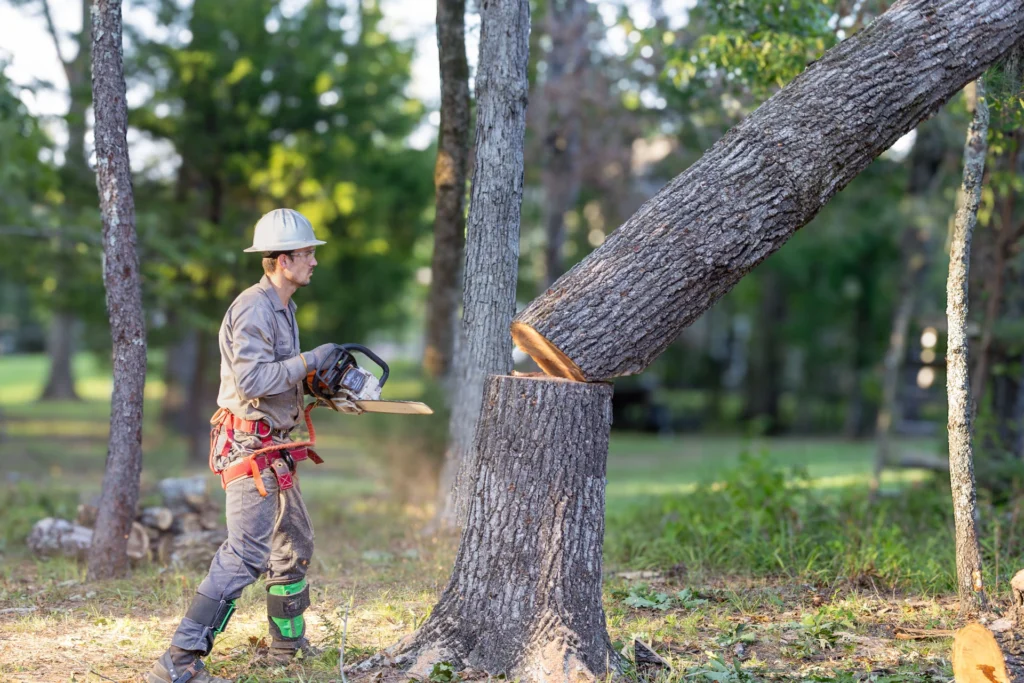
Certified arborists do not judge urgency by appearance. They judge it by two factors combined: the likelihood of failure and the consequence if failure happens. The Tree Care Industry Association and the ISA-certified arborist standards both frame hazard assessment this way, and it is the same logic a good crew applies over the phone at midnight.
A dead oak with a hollow trunk sounds terrible. If it stands in the middle of five acres with nothing under it, the consequence is a thud. That is a maintenance job.
A healthy maple with one cracked leader hanging over a child’s bedroom is a different story. The probability is moderate, but the consequence is catastrophic. That one gets a crew tonight.
Emergency status equals immediate risk to life, structures, or access, not the severity of the damage already done.
The 7 Conditions That Qualify as an Emergency
1. A Tree Has Struck a Building
Anything on a roof, wall, deck, or vehicle is urgent by default. The weight distribution keeps shifting as the wood settles, and a partially supported trunk can drop further hours after impact. This is the classic scenario where a tree fell on your house, and it needs a crew with a crane or a rigging plan, not a neighbor with a chainsaw.
2. The Tree Is Contacting or Threatening Power Lines
Stop and call the utility company. Do not approach it. Energized lines can charge the ground around a fallen tree, and downed conductors are not always visibly arcing. Utilities handle the line, then a tree service handles the wood. Every reputable crew follows this order.
3. A Trunk Is Leaning With Disturbed Soil at the Base
Look at the ground on the side opposite the lean. If the soil is cracked, heaved, or you can see the top edge of the root plate lifting, the root system has already failed. That tree is in the process of falling. It just has not finished. Look for these signs of a failing lean to confirm the danger.
4. A Large Limb Is Hung Up in the Canopy
Arborists call these widowmakers for a reason. A broken limb suspended in the branches above has no predictable release point. Wind, a squirrel, or nothing at all can bring it down. If it hangs over a driveway, walkway, or play area, it qualifies for emergency tree service.
5. The Trunk Has a Fresh Vertical Crack or Split
A split that runs down the trunk or through a major union means the tree has lost structural integrity. Included bark unions on multi-stemmed trees fail this way often, and they fail suddenly.
6. Access Is Blocked
A tree across your only driveway, across a shared road, or blocking a fire exit is an emergency for reasons that have nothing to do with the tree. Emergency vehicles need that lane.
7. Storm Damage With More Weather Coming
If the forecast calls for another round of wind or ice and you have a weakened tree, the window to act safely is now. Check NWS severe weather alerts for advance warnings to help with this kind of planning.
What Looks Urgent But Usually Is Not
| Situation | Feels Like | Actually Is | Typical Timeline |
|---|---|---|---|
| Large limbs down on the lawn | Emergency | Cleanup job | 3 to 10 days |
| Dead tree in an open field | Emergency | Standard scheduled removal | 2 to 4 weeks |
| Tree leaning but soil undisturbed | Emergency | Inspection first | 1 to 2 weeks |
| Split branch over the roofline | Judgment call | Urgent, next day | 24 to 48 hours |
| Trunk on the house | Emergency | Emergency | Same day |
| Roots lifting a sidewalk | Emergency | Planned root work | 30+ days |
| Fallen tree blocking driveway | Emergency | Emergency | Same day |
If the tree cannot reach anything you care about when it falls, you have time. If it can, you do not.
Step by Step: What to Do When a Tree Falls
- Get everyone clear. Move people and pets away from the entire fall zone, including the side the tree leans toward. Stay out of any room the tree is resting on.
- Check for utility contact. Look for lines under, over, or through the tree. If there is any doubt, treat every line as live and call the utility first.
- Photograph everything before you touch it. Wide shots, close shots, interior damage, and the date. Adjusters pay claims on documentation. Ensure you have proper insurance claim documentation ready for your provider.
- Call your insurance carrier. Open the claim before the cleanup starts so the sequence is on record.
- Call a licensed and insured tree service. Ask for the certificate of insurance and confirm they carry workers compensation. Uninsured crews shift liability onto you.
- Cover openings only if it is safe. A tarp over a roof breach limits water damage, but not at the cost of climbing onto a compromised roof.
- Keep every receipt. Emergency mitigation costs are frequently reimbursable.
Cost Reality: Why After Hours Costs More
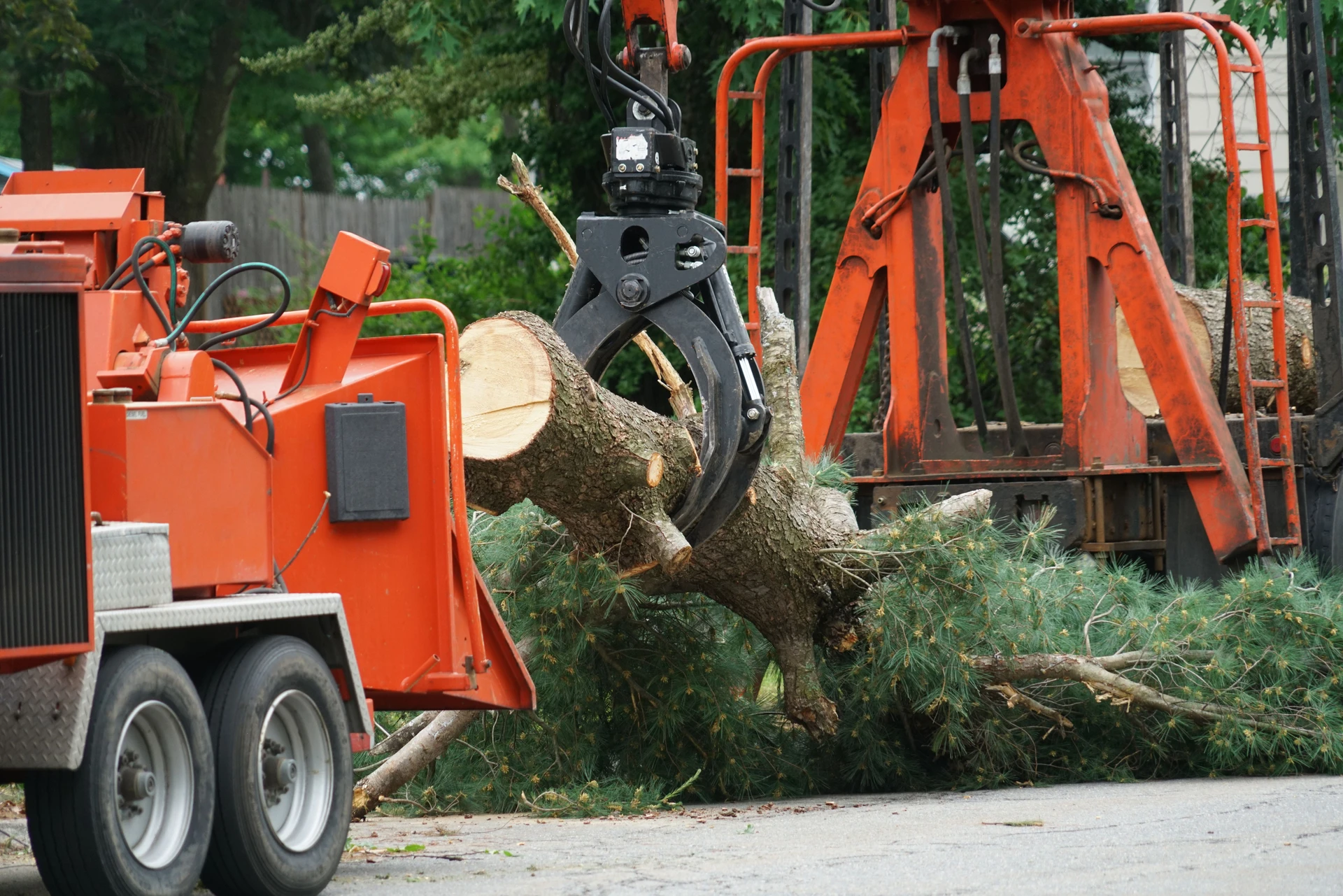
Emergency removal pricing runs meaningfully above standard removal, and the reason is not opportunism. A night call means overtime crew rates, lighting equipment, and often a crane brought in on short notice because there is no safe drop zone left. Complexity, not urgency alone, drives the number.
Three factors move the price most: proximity to structures, whether crane-assisted removal or a bucket truck is required, and where the debris goes.
Pros and Cons of Calling for Same Day Service
Pros
- Stops secondary damage from rain entering a roof breach
- Restores access for emergency vehicles and daily life
- Removes the liability of a known hazard on your property
- Documentation and cleanup happen while the claim is fresh
Cons
- Higher hourly and equipment rates than scheduled work
- Less opportunity to collect competing quotes
- Stump grinding and finish work often get scheduled separately anyway
If your only concern is appearance, choose a scheduled removal and save the difference. If any part of the tree is loaded against a structure, choose same day tree removal and accept the premium.
Do and Don’t
Do
- Assume every downed line is energized
- Verify insurance and licensing before work begins
- Ask whether the quote includes debris haul-away
- Get the scope in writing, even at midnight
Don’t
- Cut a tree that is under tension or resting on anything
- Rent a chainsaw for hazardous tree removal you have never done
- Let a door-to-door crew start work without paperwork
- Move debris before photographing the damage
A Real-World Scenario
A homeowner in a suburban neighborhood wakes to find a mature silver maple across the garage roof after an overnight windstorm. The trunk is resting on the roofline, and a service line runs beneath the canopy.
She calls the utility, which de-energizes and clears the line within a few hours. She photographs the garage from four angles, files a claim, and hires an insured crew. They arrive with a crane, lift the trunk vertically instead of dragging it, and pull it clear without widening the roof damage.
The neighbor two doors down has a dead ash standing alone at his back fence line. Same storm, no damage. He schedules that removal for the following month at standard rates. Both made the correct call for their situation.
Quick Answers
What counts as emergency tree removal?
A: Any situation where a tree or limb poses immediate danger to people, buildings, vehicles, or utility lines. Cosmetic damage and isolated dead trees do not qualify.
Who to call when a tree falls on your house?
A: Call your utility company first if any lines are involved, then your insurance carrier, then a licensed and insured tree service. Call 911 if anyone is injured or trapped.
Does homeowners insurance cover fallen tree removal?
A: Coverage generally applies when a tree strikes a covered structure. The III homeowners coverage guidelines note that a tree falling in an open yard with no structural damage is often the homeowner’s expense.
How fast can a crew respond after a storm?
A: During widespread storm damage tree removal events, response is triaged by risk. Structural impacts and blocked access come first, and yard cleanup follows.
Can I cut the tree myself to save money?
A: Not when it is loaded, leaning, or near lines. Stored tension in a fallen trunk releases violently, and chainsaw injuries spike after storms.
Is a leaning tree always an emergency?
A: No. A tree that has leaned the same way for years is usually stable. Fresh lean with cracked or lifting soil at the base is urgent.
What does emergency tree removal cost?
A: It varies with size, access, and equipment. Expect a premium over scheduled work, driven mostly by crane requirements and after-hours labor.
Should I wait for multiple quotes?
A: For fallen tree removal that is not touching a structure, yes. For active hazards, no. Verify insurance and proceed.
Glossary
- Widowmaker: A broken or detached limb hanging in the canopy that can fall without warning.
- Root plate: The mass of roots and soil anchoring a tree. When it lifts or cracks, structural failure is already underway.
- Included bark: Bark trapped inside a branch union, creating a weak connection that splits under load.
- Crane removal: A method where a crane supports and lifts sections of tree so nothing swings into structures below.

Conclusion
The line between an emergency and an inconvenience comes down to one question: if this fails right now, what does it hit? Trees over structures, driveways, and utility lines earn a same-night call. Trees standing alone in open ground almost never do.
Learning that distinction protects your budget on the quiet nights and protects your family on the loud ones. When you do need help, verify licensing and insurance, document everything before cleanup begins, and never let anyone talk you into cutting a loaded trunk yourself.
If you have a tree resting on your home, blocking your driveway, or leaning with cracked soil at the base, request an immediate assessment. Send photos if you can, and a certified team can advise you before the situation gets worse.

