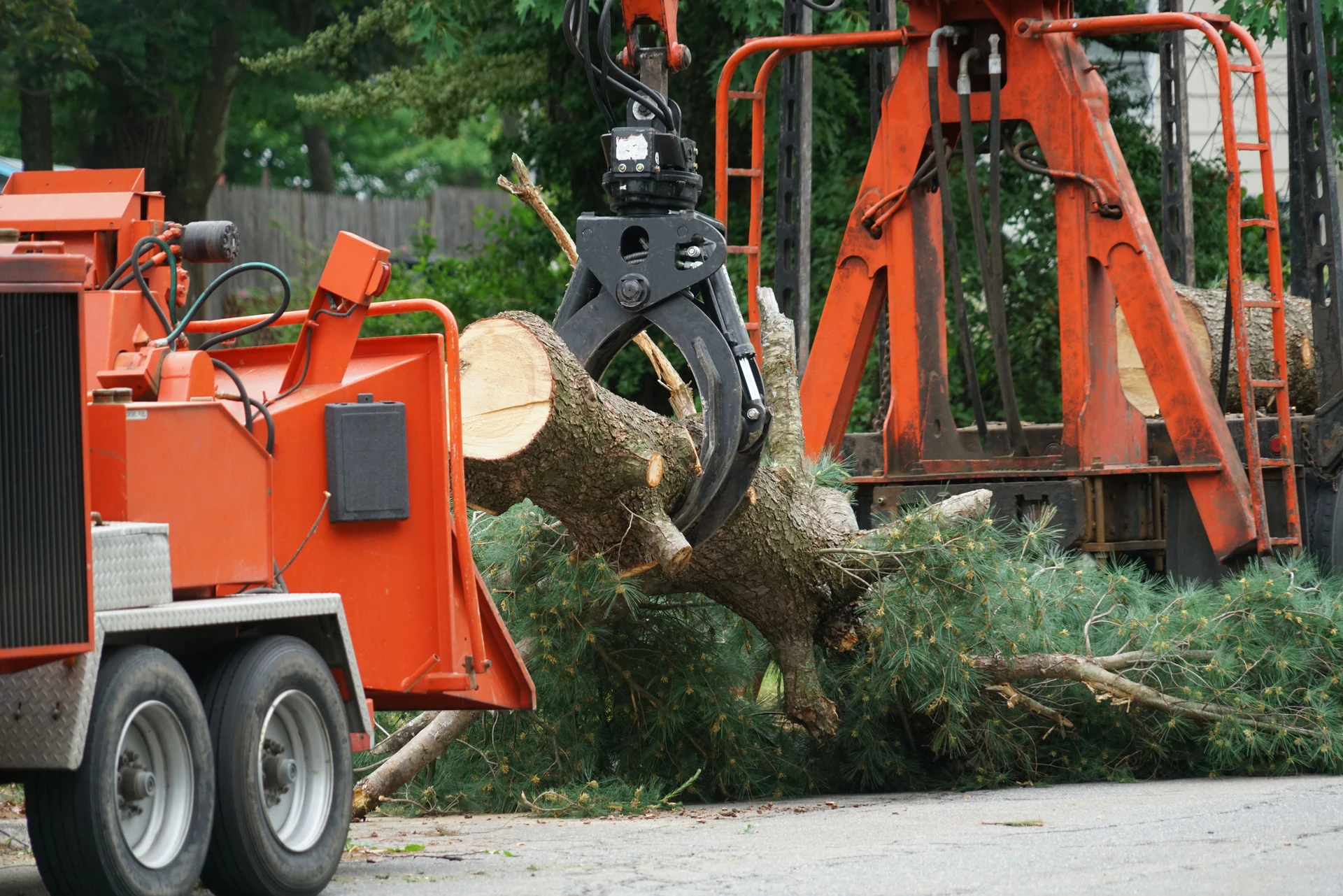
The wind stops, the rain thins out, and you step onto the porch to find half a silver maple across the driveway. What you do in the next thirty minutes matters more than most homeowners expect. Rushing outside with a chainsaw is how people get hurt. Waiting three days to call anyone is how a small roof breach turns into a ceiling collapse.
This checklist walks through exactly what to do after a storm, from the first safety sweep to the moment a crew pulls away. You will learn how to tell a genuine emergency from a job that can wait, how emergency tree removal Bucks County pricing actually works, what your homeowners policy is likely to cover, and how to spot the out-of-state crews that follow every storm system into southeastern Pennsylvania.

Key Takeaways
- Treat every downed wire as live, and never move a limb touching one.
- Emergency tree removal Bucks County crews should be insured, credentialed, and locally reachable.
- Photograph damage before cleanup begins so your insurance claim holds up.
- A tree resting on a roof needs a crane crew, not a chainsaw and a ladder.
- Trees lying harmlessly in open yards can wait for standard scheduled service.
- Storm chasers arrive first and disappear fastest, so verify credentials before signing.
The First 30 Minutes: Safety Before Cleanup
Nothing on your property is worth more than the people standing on it. Before anyone touches a branch, do a slow perimeter check from a safe distance and look up as much as you look down.
Hanging limbs are the danger most people miss. Arborists call them widowmakers for a reason: a partially detached branch can sit quietly in a canopy for hours and then drop without a sound.
Do / Don’t
Do:
- Keep everyone at least the tree’s full height away from a leaning trunk.
- Assume every downed wire is energized, including cable and phone lines tangled with it.
- Call 911 first if a line is down, then report the outage to your utility.
- Photograph and video everything from multiple angles before moving a single branch.
- Cover interior water entry points with tarps or buckets if it is safe to be inside.
Don’t:
- Don’t operate a chainsaw on a tree under tension or spring load.
- Don’t climb a ladder to reach an overhead limb.
- Don’t drive or walk under a tree resting on a roofline.
- Don’t let anyone start cutting before your insurer has seen photos.
- Don’t sign a contract handed to you in your own driveway by someone you did not call.
The Emergency Tree Removal Checklist: 8 Steps
- Move people and pets to a safe interior room away from any leaning tree or compromised roof section.
- Scan for downed conductors. If a limb touches a wire, call 911 and PECO before you call anyone else. Utility crews de-energize the line; tree crews cannot.
- Document the scene. Wide shots, close-ups, the tree base, the point of impact, and any interior damage. Timestamps help.
- Check the structure from outside. Sagging rooflines, cracked siding, or a shifted chimney mean you need a structural opinion, not just tree work.
- Call your insurance carrier and open a claim number, even if you are unsure of the coverage.
- Call a local tree service and describe the hazard precisely: species if you know it, size, what it is touching, and whether wires are involved.
- Get the scope in writing before work starts, including whether debris haul-away and stump grinding are included.
- Keep receipts for anything you pay out of pocket, including tarps and temporary lodging. Many policies reimburse reasonable mitigation costs.
If a tree has punctured the roof and rain is still falling, step six moves ahead of step five. Stopping active water intrusion protects the claim more than a phone call does.
What Actually Counts as an Emergency
Not every fallen tree justifies an after-hours callout. Paying premium rates for a job that could be scheduled Tuesday morning is one of the more common post-storm mistakes.
| Situation | Urgency | Why |
|---|---|---|
| Tree or limb contacting a power line | Call 911 and the utility immediately | Electrocution and fire risk; tree crews cannot work until it is de-energized |
| Trunk resting on the roof or through it | True emergency | Active structural load plus water intrusion |
| Tree blocking the only vehicle access | Emergency | Prevents evacuation and emergency vehicle access |
| Leaning tree with lifted root plate | Same day assessment | Can fail without warning, especially in saturated soil |
| Large hanging limb over a walkway or play area | Same day | Widowmaker risk to people below |
| Whole tree down in an open yard, nothing damaged | Scheduled service | No active hazard; standard rates apply |
| Scattered branches and twigs on the lawn | Normal cleanup | Homeowner-manageable in most cases |
If your situation appears in the bottom two rows, call during business hours and ask for storm damage cleanup Bucks County scheduling rather than an emergency dispatch. You will pay considerably less for identical work.
If it appears in the top three rows, do not wait for morning. Load transfers as wood settles, and a tree that is stable at midnight is not guaranteed to be stable at dawn.
What Drives Emergency Tree Removal Cost in Bucks County
Reputable companies price storm work by risk and complexity, not by a flat menu. Anyone quoting a firm number over the phone without seeing photos is guessing, and guesses tend to get revised upward once the truck arrives.
The variables that move the price most:
- Proximity to structures and utilities. A tree in an open field is a straightforward cut. The same tree threading between a house and a detached garage requires rigging, and rigging requires time.
- Access. Narrow lots in older Doylestown and Newtown neighborhoods often rule out equipment that would make the job fast, forcing climbing work instead.
- Equipment required. Crane work costs more than bucket truck work, which costs more than ground removal.
- Timing. After-hours, overnight, and holiday dispatch carry premiums almost everywhere.
- Volume of debris. Chipping and hauling a mature oak is a materially different job than hauling a small ornamental.
- Extras. Stump grinding, root removal, and lawn repair are usually separate line items, not assumptions.
Because factors vary this widely, treat any single published figure for emergency tree removal cost Bucks County with skepticism. Ask instead for a written scope with clear inclusions, and ask what would trigger a change order.
DIY Cleanup vs. Hiring a Crew
There is real work a homeowner can safely handle after a storm. There is also work that sends people to the emergency room every season.
Handling it yourself, pros:
- No cost beyond your own time and fuel.
- Immediate start, no waiting for a backlogged crew.
- Sensible for small branches, twigs, and debris on open ground.
Handling it yourself, cons:
- Stored tension in bent or pinned wood causes chainsaw kickback and pinching.
- Homeowner injury during cleanup is frequently excluded from coverage.
- No equipment for controlled lowering means uncontrolled falling.
- Improper cuts on a salvageable tree can kill it.
Hiring a crew, pros:
- Insured operators working to recognized industry safety standards.
- Rigging, cranes, and aerial lifts that remove weight in controlled sections.
- Documentation and invoicing your insurer will accept.
- An arborist’s assessment of which remaining trees are now unstable.
Hiring a crew, cons:
- Costs more than doing nothing.
- Response times stretch after a countywide event.
- Quality varies sharply between operators, so vetting is required.
The dividing line most professionals use is simple. If the wood is on the ground, under no tension, smaller than your forearm, and far from anything electrical, it is homeowner work. Everything else is not.
How to Vet a 24 Hour Tree Removal Company
Every large storm draws crews from outside the region. Some are legitimate and genuinely helpful. Others take deposits and vanish. The Pennsylvania Office of Attorney General publishes consumer guidance on exactly this pattern, and Pennsylvania requires many home improvement contractors to register with the state.
Ask these five questions before anyone starts:
- Can you send your certificate of general liability and workers’ compensation insurance directly from your carrier?
- Is there an ISA Certified Arborist on this crew or available to assess the property?
- Are you registered to work in Pennsylvania, and can you provide the registration number?
- What is the written scope, and does it include debris removal and stump grinding?
- Can you provide two local references from Bucks County properties?
A company that answers all five without hesitation is worth hiring. One that pressures you to sign immediately, demands full payment upfront, or cannot produce insurance from the carrier is worth declining, even at 2 a.m. with a tree on your garage.
If you are searching for downed tree removal near me and getting unfamiliar names, check whether the business has a physical address in or near the county. Local operators are still reachable in six months when the stump settles and the lawn needs regrading.
Why Bucks County Trees Fail in Storms
Understanding the failure pattern helps you assess what is still standing.
Saturated soil is the biggest single factor. When ground is waterlogged from a nor’easter or a slow tropical remnant, root plates lose their grip, and trees that survived stronger winds in dry conditions tip over intact. Root plate failure often shows as a visible mound of lifted soil on the opposite side of the lean.
The second factor is species and health. Ash trees across Pennsylvania have been devastated by the emerald ash borer, and Penn State Extension and the Pennsylvania Department of Conservation and Natural Resources have documented how brittle dead ash becomes. Dead ash does not bend in wind. It shatters, which is why it is treated as high-risk work even by experienced crews.
Co-dominant stems are the third. Trees that split into two competing trunks with a narrow, bark-included union tend to fail at that junction under load. Silver maples and Bradford pears are frequent offenders in residential yards.
After any major storm, walk your property in daylight and look for fresh soil heaving, new cracks in trunks, and canopies that suddenly look asymmetrical. Those are the trees to have assessed before the next system arrives.
A Real-World Scenario
A homeowner near Doylestown wakes to find a large ash across the back corner of the roof after an overnight thunderstorm. Water is dripping into an upstairs bedroom.
She moves her family downstairs, checks from the driveway that no wires are involved, and photographs the tree, the roofline, and the ceiling stain. She calls her insurer’s claims line, gets a claim number, and then calls a local company advertising 24 hour tree removal Bucks County service.
The crew arrives, identifies the tree as a dead ash, and declines to climb it, explaining that the wood is too brittle to rig safely. They return with a crane later that morning, remove the trunk in sections, and tarp the roof opening.
Her documentation supports the claim. The tarp limits interior damage. The crane costs more than a climbing removal would have, but it was the only defensible method for that species in that condition.
The lesson is not that cranes are always necessary. It is that a crew willing to say “not this way” is usually the crew you want.
What Insurance Typically Covers
General patterns hold across most standard homeowners policies, though your specific policy language governs. The Insurance Information Institute is the clearest neutral reference on how these claims usually work.
Coverage commonly applies when a tree damages a covered structure such as a house, garage, fence, or shed. Removal costs are frequently included in that scenario, sometimes with a per-tree or per-claim sublimit for debris removal.
Coverage is commonly denied when a tree falls without hitting anything, or when the tree was visibly dead or hazardous well before the storm. Deferred maintenance is a standard exclusion argument.
If your neighbor’s tree lands on your house, your own policy is usually the first place to file. Liability shifts toward the neighbor mainly when the tree was documented as hazardous and they were notified.
Quick Answers, FAQ
How fast should an emergency tree crew respond?
A: For a hazard involving a structure or blocked access, expect same-day response under normal conditions. After a countywide storm, response can stretch to several days as crews triage by severity.
Should I call the power company or a tree service first?
A: Call 911 and your utility first if any wire is involved. Tree services are not permitted to work on energized lines and will wait for the utility regardless.
Does homeowners insurance cover fallen tree removal Bucks County claims?
A: Usually yes when the tree strikes a covered structure, often with a debris removal sublimit. A tree that falls in open yard space without causing damage is typically not covered.
Can I cut up the tree myself to save money?
A: Small ground debris under no tension is reasonable. Anything overhead, under load, or near wires should be left to an insured crew.
What is a widowmaker?
A: A broken limb hanging in a canopy that can fall without warning. It is one of the leading causes of injury during post-storm cleanup.
Is stump grinding included in emergency removal?
A: Rarely. It is almost always a separate service and a separate line item, so confirm before you sign.
How do I know if a leaning tree is about to fall?
A: Look for lifted or cracked soil at the base, exposed roots on the side opposite the lean, and fresh trunk cracks. Any of those warrant a same-day assessment.
What should I do if a tree damages a neighbor’s property?
A: Document it, notify your neighbor, and report it to your insurer. Do not enter their property to cut without permission.
Glossary of Terms
Widowmaker: A detached or partially detached limb suspended in a tree canopy. It can drop at any time and is a primary cause of cleanup injuries.
Root plate: The mass of roots and soil that anchors a tree. When it lifts on one side, the tree has already begun to fail structurally.
Co-dominant stems: Two or more trunks of similar size growing from a shared union. The junction is often weak and is a common failure point in storms.
ISA Certified Arborist: A tree care professional credentialed by the International Society of Arboriculture through examination and continuing education requirements.

Conclusion
Storm cleanup goes wrong in predictable ways: someone touches a wire, someone climbs a ladder with a saw, or someone hands a deposit to a crew that was in the neighborhood by coincidence. Working through this checklist in order removes most of that risk.
Sort real hazards from ordinary mess, document before you clean, respect the power lines absolutely, and hire people who can prove they are insured and credentialed. Emergency tree removal Bucks County work done correctly protects your family first, your structure second, and your claim third, in that order.
If a tree is on your roof, across your driveway, or leaning over a bedroom right now, call a local crew and describe the hazard exactly as you see it. Reach out for a same-day storm damage assessment.