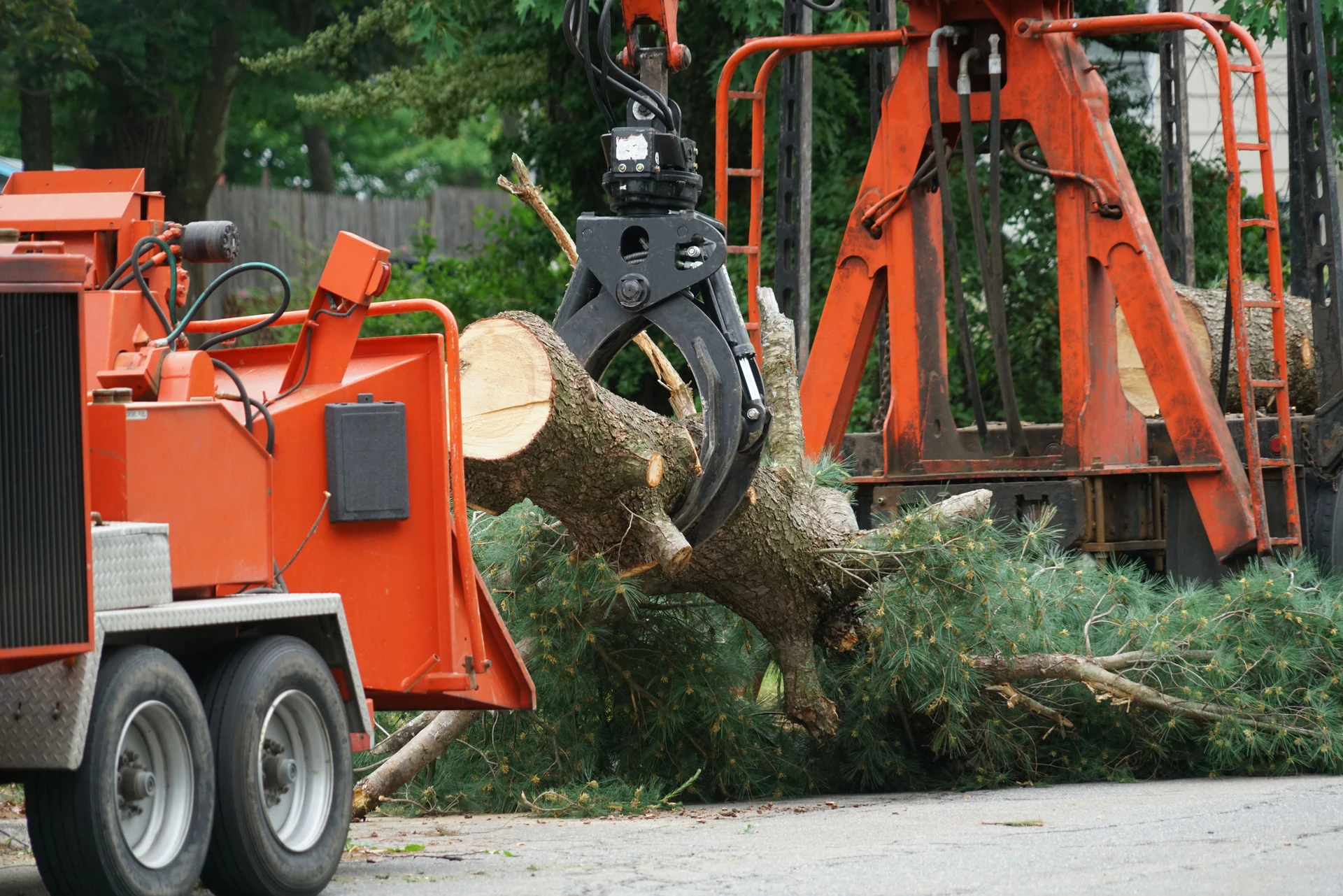
A storm rolls through Bucks County, the wind gusts hard for twenty minutes, and suddenly a mature oak is lying across your driveway or leaning into your roofline. What you do in the next hour shapes your safety, your insurance claim, and your final bill. This guide walks through the decisions that matter when you need emergency tree removal Doylestown, PA, from the first sixty minutes to choosing a crew you can trust.
You will learn how to assess danger without getting close, who to call and in what order, how emergency work differs from scheduled removal, what your homeowners policy typically covers, and how to spot the warning signs on the trees still standing in your yard.

Key Takeaways
- Treat every downed line as live, even if the tree looks completely still.
- Call 911 first for injuries, blocked roads, or a tree on a structure.
- Emergency tree removal in Doylestown PA costs more than scheduled work, for good reason.
- Photograph everything before any branch is cut or moved.
- Verify insurance and ISA credentials before a crew touches your property.
- Most storm failures start with defects a trained eye could have spotted earlier.
What Actually Counts as a Tree Emergency
Not every fallen limb requires a middle of the night response. Knowing the difference saves money and keeps crews available for genuine hazards.
True emergencies
A situation is an emergency when the tree is in contact with a structure, a vehicle, or any utility line. It is also an emergency when a trunk or large limb is blocking the only access to your property, when a tree is actively leaning toward a house with visible root plate lifting, or when a large limb is hung up in the canopy and could drop without warning. Arborists call that last one a widowmaker, and it is exactly as dangerous as it sounds.
Urgent but not emergency
A tree that has fallen cleanly into an open lawn, away from structures and lines, is usually urgent rather than emergency. The same is true for a split limb resting on the ground with no tension in it. These can often wait for a next day appointment at standard rates, which is why the honest answer to “is this an emergency?” often saves homeowners hundreds of dollars.
The tension trap
Fallen trees store enormous energy. A trunk bent across a fence or pinned under another tree is loaded like a spring. When someone cuts into it without reading the tension, the wood can snap sideways with lethal force. This is the single most common way homeowners get seriously hurt after a storm.
The First 60 Minutes: A Step-by-Step Response
- Get everyone clear and stay out of the fall zone. Move people and pets at least one and a half tree lengths away from any leaning trunk or hung limb.
- Assume every wire is energized. Do not touch the tree, the fence it landed on, or standing water near it. Electricity travels through wet wood and metal.
- Call 911 if there are injuries, a tree on an occupied structure, a road blockage, or any downed line. Emergency services will dispatch and coordinate with the utility.
- Report power outages and downed lines to your electric utility directly. Only the utility can de-energize a line, and no reputable tree crew will work near one until they have.
- Evacuate the affected part of the house if a trunk has penetrated the roof or a wall. Structural loads shift as the tree settles.
- Shut off gas or water in the affected zone if you smell gas or see a leak, and only if you can do it safely from outside the damage area.
- Document everything from a safe distance. Wide shots, close ups, timestamps, and the tree’s original position all matter to your adjuster.
- Call your insurance carrier and open a claim before authorizing major work, unless the situation is unsafe to leave as is.
- Call a licensed and insured tree service for 24-hour emergency tree service in Doylestown. Ask for proof of general liability and workers compensation coverage before they arrive.
- Keep all receipts, including tarps, plywood, and temporary lodging. These are often reimbursable.
If a tree has fallen but nothing is touching a structure or a wire, you can slow down and schedule properly. If anything is in contact with a line or a roof, you are in the emergency category and every hour of delay adds risk.
Who to Call, and in What Order
| Situation | Call first | Why it matters |
|---|---|---|
| Injury, road blocked, tree on occupied home | 911 | Fastest coordinated response, scene safety, and traffic control |
| Tree on a power line or downed wire | Electric utility | Only the utility can de-energize; no crew should work live |
| Tree on your roof, no wires involved | Insurance carrier, then tree service | Documentation before removal protects your claim |
| Tree down on a public road or township right of way | Doylestown Township or Borough public works | Municipal trees and right of way work are their responsibility |
| Tree fell into a neighbor’s yard | Your insurer and theirs | Liability usually follows where it landed, not where it grew |
| Tree down in open lawn, no damage | Tree service, standard scheduling | No emergency premium needed |
Emergency vs. Scheduled Tree Removal
| Factor | Emergency removal | Scheduled removal |
|---|---|---|
| Response time | Same day or overnight | Typically several days to weeks |
| Typical cost | Meaningfully higher; night, weekend, and crisis rates apply | Standard pricing, often with seasonal discounts |
| Equipment | Professional crane assistance often required due to compromised access | Planned rigging and controlled felling |
| Risk profile | High; loaded wood, unstable soil, possible structural damage | Low; the crew controls every variable |
| Permitting | Emergency exemptions may apply for hazard trees | Municipal permit may be required in regulated zones |
| Insurance involvement | Common, especially with structure damage | Rare; usually out of pocket |
| Cleanup scope | Often staged, with debris removal following the make safe work | Complete in one visit |
The pricing gap is not opportunism. It reflects night crews, crane mobilization, and the genuine hazard of cutting wood that is under load in the dark.
Should You Remove It Tonight or Wait for Daylight?
Pros of overnight emergency removal
- Stops ongoing damage when a trunk is pressing into a roof or wall
- Restores access for other emergency vehicles
- Prevents secondary failure of a partially supported limb
- Starts the drying and repair clock sooner, which limits mold risk
- Demonstrates prompt mitigation, which insurers expect
Cons of overnight emergency removal
- Costs noticeably more than a next day appointment
- Reduced visibility increases risk for the crew
- Harder to fully document damage in the dark
- Rushed decisions can complicate a claim if photos are incomplete
- Fewer verified companies available, which raises the odds of hiring a storm chaser
If the tree is stable, nothing is touching a wire, and the weather has passed, waiting until first light is usually the smarter call. If a trunk is on a bedroom roof or the tree is still moving, do not wait.
Do and Don’t: Homeowner Ground Rules
Do
- Keep children and pets indoors until the site is cleared
- Photograph the scene before anything is moved
- Ask for a written scope of work, even in an emergency
- Confirm the crew carries workers compensation, not just liability
- Save damaged property until the adjuster has seen it
- Tarp openings in the roof if you can do so safely from inside or from a stable ladder
Don’t
- Do not attempt chainsaw work on a tree under tension
- Do not climb a ladder to reach limbs after a storm
- Do not pay a large deposit in cash to an unfamiliar door knocker
- Do not sign a blank work authorization or an open ended assignment of benefits
- Do not move debris off a vehicle before photographing it
- Do not assume a tree that stayed standing is undamaged
What Homeowners Insurance Typically Covers
Coverage varies by policy, so read yours. That said, the general pattern in Pennsylvania is consistent.
Most policies cover removal when the fallen tree damages a covered structure such as your house, garage, fence, or shed. Removal is usually capped at a set amount per occurrence. If a healthy tree falls in your yard and hits nothing, most policies will not pay for the cleanup.
The Insurance Information Institute’s guide on tree damage is a useful reference for how these clauses are generally written. Your own declarations page is the authority.
Two conditional rules worth remembering. If your tree falls onto your neighbor’s house, their policy typically responds first, though your liability can come into play if you were on notice that the tree was hazardous and did nothing. If your neighbor’s tree falls on your house, your policy typically responds, and your carrier may pursue their carrier afterward.
This is why documented tree care matters. A record of inspections and pruning is strong evidence that you were not negligent.
A Realistic Scenario;
A homeowner off Easton Road with a large silver maple close to the driveway. A summer thunderstorm brings a strong gust, and a codominant stem splits at the union, dropping across the driveway and clipping the garage roof corner.
She keeps her family inside, sees no wires involved, and photographs the scene from the porch. She calls her carrier, opens a claim, then calls a local crew for same day tree removal Doylestown homeowners rely on. The crew arrives, confirms no line contact, cuts the limb off the roof under controlled rigging, tarps the opening, and stages the remaining debris for next day cleanup.
The adjuster approves the removal cost tied to the structure damage plus the roof repair. Because she photographed first and hired an insured crew, nothing about the claim is contested. Had she cut the limb herself and dragged it to the curb before documenting, the outcome would likely have been messier.
How to Vet a Tree Service in a Storm Week
Storms bring out both excellent local crews and traveling operators with a rented saw. The screening questions are simple.
Ask for a certificate of insurance sent directly from their agent, not a photocopy. Ask whether an ISA Certified Arborist will be on site. Ask for a written estimate with a defined scope, including whether stump grinding and debris haul away are included or separate. Ask about their plan for protecting your lawn, septic field, and hardscaping.
If you need work near energized lines, choose a company with line clearance qualified staff rather than a general crew. If you need a large removal over a house, choose a company that owns or regularly contracts a crane rather than one planning to climb and rig a compromised tree.
The International Society of Arboriculture maintains credentialing standards, and the Tree Care Industry Association accredits companies on safety and business practices. Both are reasonable starting points for verification.
Preventing the Next Emergency
Most storm failures are not random. They start with defects that are visible months or years ahead.
- Watch for mushroom growth at the base, which often indicates root or butt rot.
- Watch for cracked or included bark in the union between two large stems.
- Watch for a sudden lean with soil heaving on the opposite side, deadwood in the upper canopy, and cavities where old limbs were removed poorly.
An inspection by a certified arborist before storm season is inexpensive compared to storm damage tree removal Doylestown property owners face afterward. Pennsylvania’s Department of Conservation and Natural Resources publishes general guidance on tree health and community forestry that is worth reading if you own several mature trees.
Quick Answers: FAQ
How fast can I get emergency tree removal in Doylestown PA?
A: Most local companies aim for same day response for genuine hazards, with overnight arrival during active storm events. Response times stretch when a regional storm hits many properties at once.
Does homeowners insurance pay for emergency tree removal?
A: Usually yes when the tree damaged a covered structure, subject to your deductible and a removal cap. A tree that falls without hitting anything is typically not covered.
Do I need a permit to remove a fallen tree in Doylestown?
A: Emergency hazard removal on private property generally does not require advance permitting, but rules differ between the Borough and Township and in regulated or riparian areas. Check with your municipality before non emergency removals.
Who is responsible if my neighbor’s tree falls on my house?
A: Your own policy typically handles the damage first. Your insurer may seek recovery from theirs if the tree was documented as hazardous and ignored.
Can I remove the tree myself to save money?
A: Only if it is fully on the ground, small, under no tension, and far from any structure or wire. Otherwise the risk is not worth the savings.
What does emergency tree removal cost?
A: Pricing depends on size, access, proximity to structures, crane needs, and time of day. Emergency and overnight work carries a premium over scheduled removal.
Should I call 911 or the power company for a tree on a wire?
A: Call 911 first if the line is arcing, sparking, or blocking a road, then report to the utility. Both need to know.
Will the township remove a tree that fell in my yard?
A: Generally no. Municipal crews handle trees in public rights of way and on public property, not private lots.
Can a crew work at night?
A: Experienced companies do, using lighting and cranes, though they will often make the site safe first and complete cleanup in daylight.
How do I find reliable emergency tree service in Bucks County?
A: Look for ISA credentials, verifiable insurance, a physical local address, and written estimates. Avoid unsolicited door to door offers requiring cash up front.
Glossary of Terms
- Widowmaker: A broken limb hanging in the canopy that can fall without warning. It is one of the most dangerous conditions on a storm damaged tree.
- Codominant stem: Two similar sized trunks growing from the same point on a tree. These unions are structurally weak and are a frequent failure point in high wind.
- Root plate: The mass of roots and soil anchoring a tree. When it lifts on one side, the tree is in the process of falling and should be treated as an active hazard.
- Make safe work: The initial phase of emergency response that removes the immediate danger, such as cutting a limb off a roof, before full cleanup and debris removal begins.

Conclusion
A fallen tree is stressful, but the response is learnable. Keep distance, treat every wire as live, call in the right order, document before you cut, and hire a crew whose insurance and credentials you have actually verified. Those five habits protect your family, preserve your claim, and keep the final cost as low as the situation allows.
The trees still standing in your yard deserve attention too. A short inspection before the next storm season is the cheapest form of tree care there is.
If a tree has come down on your property, contact our emergency response team now. Our certified crew responds day or night, works safely around utility lines, and documents everything your insurer will ask for.