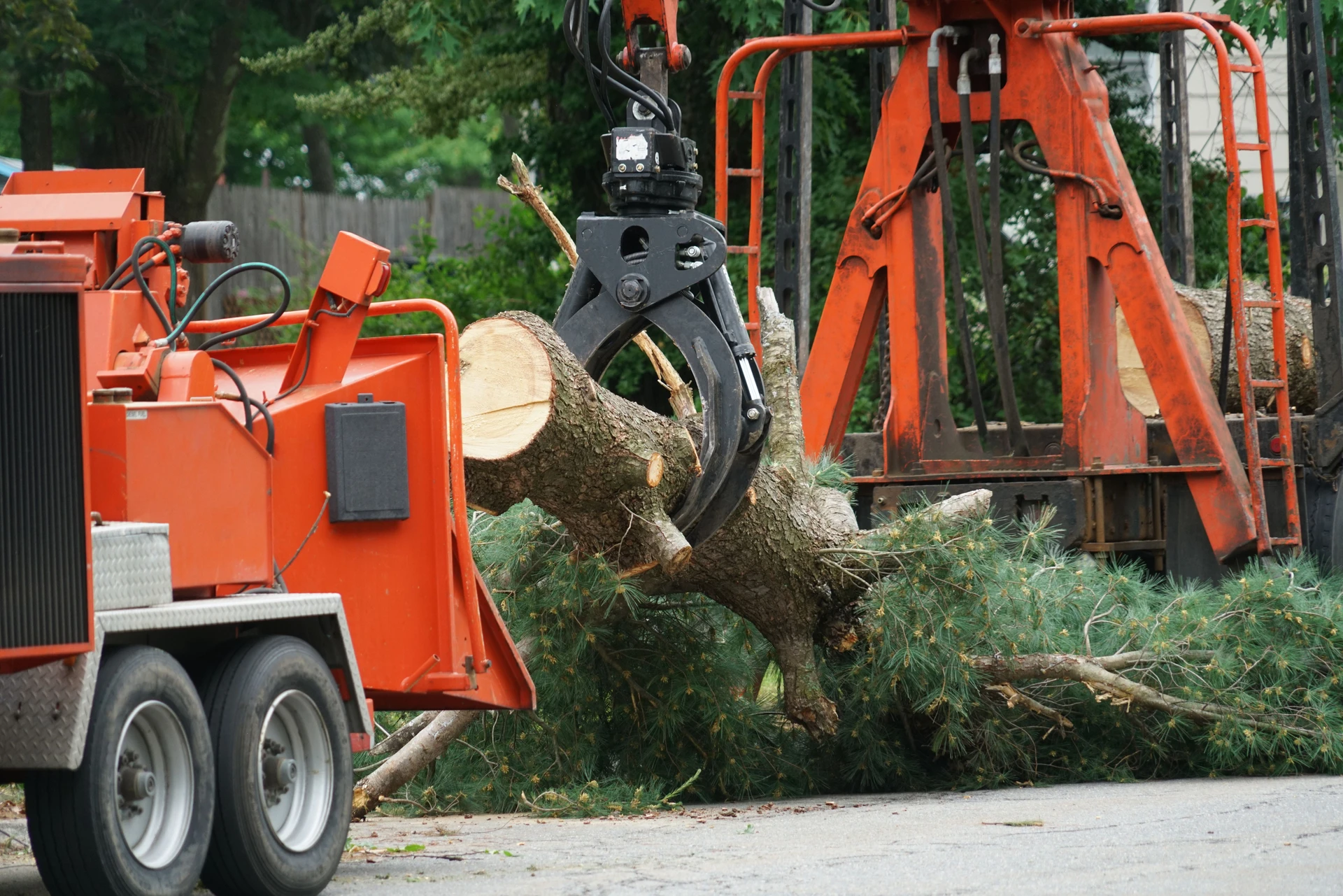
Key Takeaways
- Treat every downed tree as electrified until a utility crew confirms otherwise.
- Handle a Fallen Tree starts with clearing people, not clearing debris.
- Photograph everything before moving a single branch for insurance purposes.
- Storm damage tree removal is priced by risk and access, not just tree size.
- Chainsaw injuries spike after storms, mostly among untrained homeowners.
- Call 911 first if wires, gas lines, or occupied structures are involved.

The sound comes first. Then the silence. Then the slow realization that something very large is now lying across your driveway, your roof, or your neighbor’s fence.
What happens in the next twenty minutes matters more than most homeowners expect. Professional fallen tree removal crews are trained for this, but they cannot be everywhere at once during a storm, and wait times of several hours are common when wind events hit an entire region. That gap is where people get hurt, usually by doing something reasonable that turns out to be dangerous.
This article covers what to do, what to avoid, and how to make the eventual cleanup faster and cheaper.
Step One: Assume the Tree Is Live
A fallen tree that has touched an overhead line can energize the ground around it, the fence it landed on, and the puddle beside it. You cannot see this. There is no sound, no spark, no smell.
The International Society of Arboriculture and the Tree Care Industry Association both treat downed conductors as a specialty hazard that only qualified line-clearance workers may approach. Utility companies say the same thing in plainer language: stay back and call.
Keep at least 35 feet between yourself and any tree touching a wire, and keep that distance from anything the tree is touching.
If you are inside a vehicle when a line falls on it, stay inside and call for help. Exiting a car in that situation is one of the few times where “do nothing” is the correct answer.
The First Hour: A Step-by-Step Sequence
- Account for everyone. People and pets first, in that order, before you look at property. Move everyone to a room on the opposite side of the house from the impact.
- Get outside if the tree hit the structure. A tree on the roof means unknown structural load. Ceilings sag before they fail.
- Look up before you look around. Hanging limbs, called widowmakers, are the leading cause of post-storm injuries. They can drop hours later with no wind at all.
- Scan for wires, meters, and gas lines. If any are involved, call 911 and your utility provider. Do not wait for daylight.
- Kill the power to affected areas at the breaker if you can reach the panel safely and dryly.
- Cordon off the area. Cones, tape, cars parked across a driveway, anything that stops a neighbor or child from wandering into it.
- Document before you touch. Wide shots, close shots, timestamps, and video narration if you can manage it.
- Call for emergency tree cutting service and give a clear description of what the tree is on, whether wires are involved, and how a truck would access the property.
- Call your insurer and open a claim number, even if you are not sure you will use it.
- Cover openings only if it is safe. Tarping a roof from inside an attic is safer than climbing onto a damaged roof.
Who to Call When a Tree Falls on Your House
This is the question that stalls people, and the answer depends on what the tree is touching.
| Situation | Call first | Why |
|---|---|---|
| Tree on power lines | 911 and your utility | Only line-clearance crews can de-energize and work near conductors |
| Tree on occupied house | 911 | Structural and life-safety assessment takes priority |
| Tree on unoccupied structure or garage | Emergency tree service | No immediate life safety issue, but the load is unstable |
| Tree blocking a public road | Local police or public works | Road clearing is a municipal responsibility |
| Tree down in yard, nothing struck | Tree service, normal hours | No urgency premium needed |
| Gas smell present | 911 and gas utility, from a distance | Evacuate before calling |
The pattern is simple. Anything involving electricity, gas, or people goes to emergency responders. Anything involving only property goes to a tree care company.
Why You Should Not Cut It Yourself
Every storm produces a wave of homeowners with new chainsaws and no training. Emergency physicians and safety organizations including OSHA have long flagged post-storm chainsaw injuries as a predictable seasonal pattern.
The core problem is not the saw. It is compression and tension.
A fallen trunk is a loaded spring. Fibers on one side are compressed, fibers on the other are stretched, and the saw releases that energy the moment it cuts through. The log can roll, the butt end can kick upward, and a limb bent under the trunk can whip out at speed. Arborists read this loading before every cut. It is not intuitive, and it is not something you learn from a video during a power outage.
Root plates add a second hazard. A tree that tipped over holds a vertical disc of soil and roots, sometimes eight feet across. Cut the trunk free and that plate can slam back into its hole, taking anything nearby with it.
Pros and Cons of Waiting for Professionals
Pros
- Trained crews assess loading, wire proximity, and structural risk before cutting
- Insured companies carry coverage if something goes wrong during removal
- Proper equipment means less secondary damage to lawns, roofs, and siding
- Documentation from a licensed company strengthens an insurance claim
- Debris hauling and stump grinding are handled in the same visit
Cons
- Wait times after a regional storm can stretch to days
- Emergency rates carry an after-hours premium
- Access may require moving vehicles or temporary fencing
- You may need to tarp openings yourself in the meantime
The tradeoff usually favors waiting. The exception is a small, clearly isolated limb well away from structures and wires, on level ground, with no tension in it. Even then, work with someone else present.
Do and Don’t
Do
- Keep 35 feet from any tree contacting a wire
- Photograph damage from multiple angles before cleanup
- Note the date, time, and weather conditions in writing
- Ask any company for proof of liability and workers’ compensation coverage
- Clear a path for truck and crane access if you safely can
Don’t
- Climb onto a damaged roof to inspect or tarp it
- Stand under hanging limbs, even briefly
- Cut anything under visible tension
- Move debris that is supporting weight above it
- Sign a blank work authorization or a contract with no scope written in
Conditional Guidance for Common Scenarios
If the tree is resting on your roof but has not penetrated it, treat the load as unstable and vacate rooms directly beneath. A tree that is merely leaning can shift when wind picks up or when saturated soil dries and settles.
If you need same day tree removal because the tree blocks your only exit, say exactly that when you call. Companies triage by risk, and access-blocking trees on occupied properties move up the list ahead of yard cleanup.
If the tree fell onto a neighbor’s property, document from your side, notify them promptly, and let the insurers sort out responsibility. In most of the United States, damage is handled by the policy covering the property that was struck, though negligence over a known dead tree can change that. The Insurance Information Institute is a useful starting point for how these claims typically work.
If you are choosing between cleanup now and a full assessment later, get the hazardous tree removal done first and schedule an arborist visit afterward for the remaining trees. Storms weaken neighbors of the tree that fell, and those are the ones that come down next.
A Real-World Scenario
A homeowner wakes at 2 a.m. to a red oak across the driveway, its canopy resting on the garage. No wires are visible in the dark. He decides to wait until morning, moves the family’s cars to the street, and tapes off the driveway.
At first light, he sees what the flashlight missed: the service drop to the house is pinned under a limb, stretched but intact. Had he started cutting at 2 a.m., his first cut would have released tension directly onto that line.
He calls the utility, which de-energizes the drop, then calls a tree service. The crew removes the canopy in sections, relieves the load on the garage, and flush cuts the trunk. Total cost lands in the mid four figures, most of which the insurer covers after he submits the overnight photos.
The decision that saved him was doing nothing for six hours.
What Fallen Tree Removal Costs and Why
Emergency tree removal cost varies widely, and honest companies will tell you they cannot quote it blind. Pricing is driven by risk and access more than by trunk diameter.
| Cost factor | Lower cost | Higher cost |
|---|---|---|
| What the tree hit | Open lawn | Roof, wires, or vehicle |
| Access for equipment | Wide driveway | Backyard, fenced, or sloped |
| Timing | Scheduled daytime | Overnight or holiday |
| Rigging needed | Ground-level cuts | Crane or climber required |
| Debris handling | Homeowner keeps wood | Full haul-away and disposal |
| Stump | Left in place | Ground and backfilled |
Expect storm damage tree removal to sit at the higher end of a company’s range, because the same conditions that dropped the tree also make the work more complex. Ask for the scope in writing: removal only, removal plus haul-away, or removal plus stump grinding.
Quick Answers
Who should I call when a tree falls on my house?
A: Call 911 first if the house is occupied or wires are involved. Otherwise call an emergency tree cutting service directly and open an insurance claim.
Is it safe to move branches myself after a storm?
A: Only loose, small branches on the ground, well away from wires and from anything supporting weight. Anything under tension or overhead should wait.
How quickly can a tree service arrive after a storm?
A: Same day tree removal is often possible for isolated incidents. After a regional storm, expect a queue based on danger level.
Will homeowners insurance cover fallen tree removal?
A: Coverage typically applies when the tree damages an insured structure, with limits on removal alone. Check your policy and confirm with your carrier.
What if the tree fell from my neighbor’s yard?
A: Generally the policy on the damaged property responds, unless the tree was visibly dead and reported beforehand. Document the condition either way.
How long can a tree safely stay on a roof?
A: Not long. Load shifts as branches settle and moisture changes, and every hour adds risk of interior water damage.
Do I need permission to remove a fallen tree?
A: Fallen trees on private property usually do not require permits, but protected species and municipal rules vary. Check locally before removal on public strips.
Should I keep the wood?
A: You can, and it lowers the bill. Say so before the crew arrives so they stack rather than chip.
Glossary
- Widowmaker – A broken branch hanging in the canopy that has not yet fallen. It can drop without warning and is a leading cause of injury during cleanup.
- Root plate – The disc of soil and roots lifted vertically when a tree tips over. It can swing back into its hole when the trunk is cut free.
- Tension and compression wood – Opposite sides of a loaded log. Cutting them in the wrong order causes the log to pinch the saw or spring violently.
- Service drop – The overhead wire running from the utility pole to your house. It is the line most often caught by falling trees.

Conclusion
The instinct after a tree comes down is to fix it. That instinct is what puts people in emergency rooms.
The better move is slower and less satisfying: secure the area, keep your distance from anything electrical, photograph the scene, and let trained crews handle the loaded wood. Safe fallen tree removal is a sequencing problem, and the sequence starts long before the first cut.
If a tree is down on your property right now, call a licensed and insured tree service and describe exactly what it landed on. If nothing has fallen yet, this is the right week to have your trees inspected, because the ones still standing after a storm are often the next to go.