Key Takeaways
- Storm damaged tree removal in Doylestown starts with safety, not cleanup or chainsaws.
- Downed wires make every fallen tree a live electrical hazard until utility crews clear it.
- Photograph the damage before anything moves. Insurance adjusters need that evidence.
- Leaning trees, hanging limbs, and split trunks are urgent even if nothing has fallen yet.
- Emergency tree cutting service costs more, but delay often costs far more.

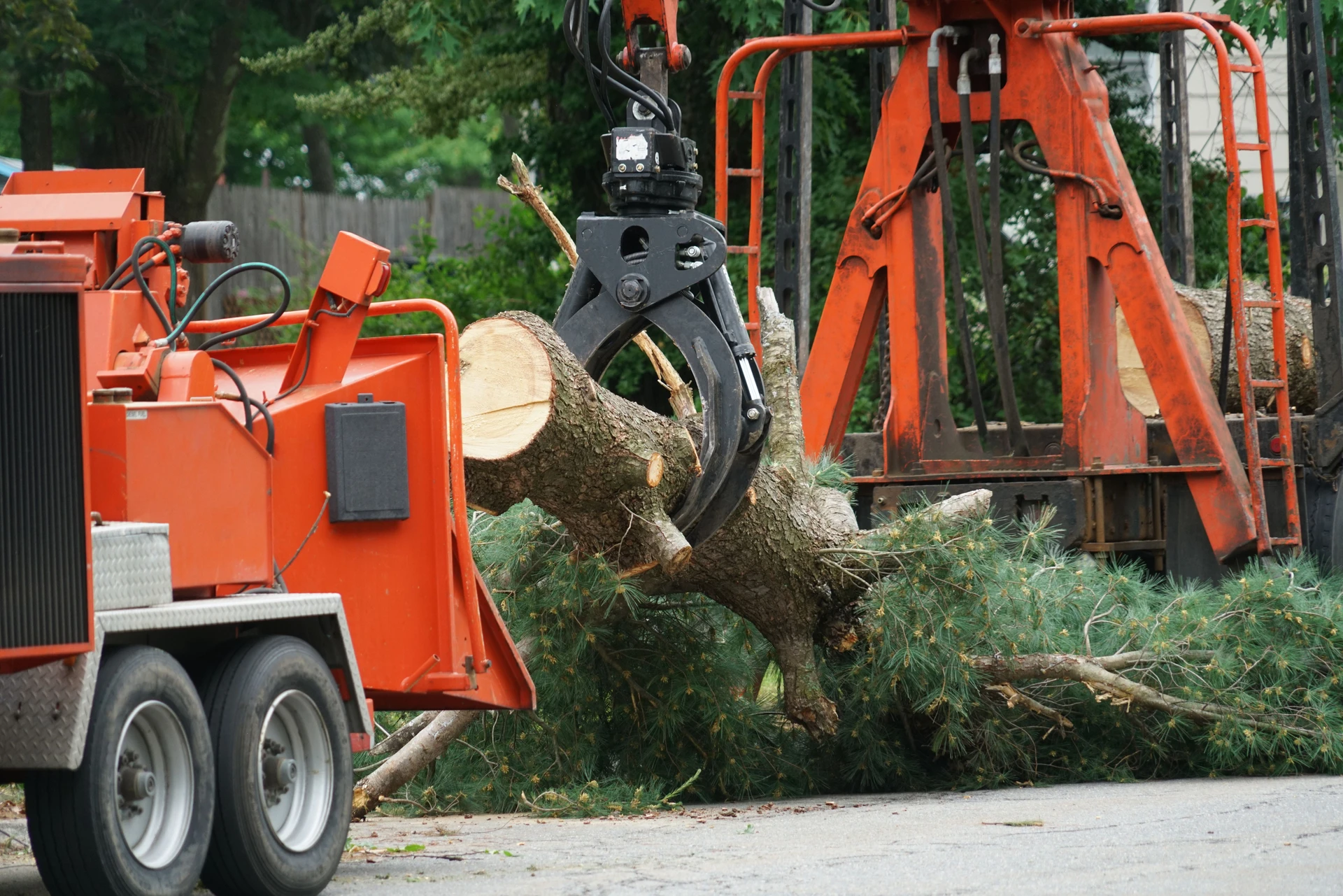
Bucks County storms have a pattern. A summer thunderstorm rolls through, the wind gusts hard for ten minutes, and the next morning half the neighborhood is looking at split maples and limbs across driveways. Storm damaged tree removal in Doylestown is not a job you plan for. It arrives at 6 a.m. with a tree on the garage roof and a phone that will not stop ringing.
This guide walks you through what to do in the first hour, how to tell an emergency from a job that can wait until Tuesday, what affects emergency tree removal cost, and how to choose a crew that will not turn one problem into two.
First, Understand What You Are Actually Looking At
Not every damaged tree is the same risk. Before you touch anything, figure out which category you are in.
- Immediate danger. A tree on the house, a tree on a vehicle with people nearby, any tree touching or near power lines, or a tree blocking your only exit. This is emergency territory. Call for help, not a ladder.
- Urgent but stable. A large limb hanging in the canopy, a trunk with a fresh vertical split, or a tree leaning noticeably more than it did yesterday. Nothing has fallen, but the failure has already started.
- Cleanup. Small branches down, a dead limb finally let go, debris across the lawn. Annoying, not dangerous.
The mistake most homeowners make is treating category two like category three. A hanging limb is called a widowmaker for a reason. It can drop with no warning and no wind.
Step-by-Step: What To Do After the Storm
Follow these in order. Skipping ahead is how people get hurt.
1. Get everyone away from the tree.
Move people and pets at least as far from the tree as the tree is tall. Damaged wood fails without a sound and without warning.
2. Assume every wire is live.
If a tree is touching a power line, or if you see a line down anywhere near it, call PECO and 911. Do not approach. Electricity travels through wet wood, wet ground, and standing water. This single rule prevents most storm-related tree fatalities. For specific safety protocols, refer to PECO’s downed line safety protocols.
3. Check the structure, then get out if needed.
If a tree is on your house, look for sagging ceilings, cracked walls, or a smell of gas. If anything seems wrong, leave the house and call the fire department before anyone goes back in.
4. Photograph everything before you move a stick.
Wide shots, close shots, damage to the structure, the root plate, the direction of fall. Insurers pay claims based on evidence. Cleanup that happens before documentation is cleanup you may not be reimbursed for.
5. Call your insurance company.
Ask two questions specifically: is fallen tree removal covered here, and does the policy cover removal only when the tree hits a covered structure. The answers vary and they determine your out of pocket cost.
6. Call a licensed and insured tree service.
For anything involving a roof, a vehicle, a fence, or a tree over head height, this is the step where amateurs cause the second accident. Ask for an emergency tree service if the situation is unstable.
7. Handle the small stuff yourself, carefully.
Ground level branches, sticks, and light debris are fine to clear by hand. Anything requiring a ladder or a chainsaw above your shoulders is not.
Who To Call When a Tree Falls on Your House
The order matters more than people expect.
- If wires are involved, call the utility first. Nobody else can make the site safe.
- If the structure is compromised or you smell gas, call 911 next.
- Once the site is safe, call a tree removal company before you call a roofer. The tree has to come off via safe removal from a structure before anyone can assess or repair what is underneath. A good crew will rig the tree down in controlled sections rather than pulling it off and taking half your roof decking with it.
- Then call your insurance company and your roofer, in that order.
Emergency Removal vs. Scheduled Removal
| Factor | Emergency Removal | Scheduled Removal |
|---|---|---|
| Response time | Hours, often same day | Days to weeks |
| Typical trigger | Tree on structure, wires, blocked access | Identifying hazardous leaning trees, storm-weakened but stable |
| Crew size | Larger, often with crane or bucket support | Standard crew |
| Cost | Higher, reflects after-hours and risk | Standard pricing |
| Insurance involvement | Common | Rare unless damage occurred |
| Cleanup depth | Often staged, hazard first | Complete in one visit |
If your tree is on a structure, blocking access, or near wires, choose emergency service. If the tree is leaning but nothing is under it and no wires are near, scheduled hazardous tree removal is usually the better value.
Pros and Cons of Same Day Tree Removal
Pros
- Stops secondary damage from rain entering a damaged roof
- Restores access to driveways, exits, and utilities
- Reduces liability if a hazard extends toward a neighbor or sidewalk
- Documents the hazard while insurers are actively processing storm claims (see our guide on insurance coverage for storm damage)
Cons
- Costs more than scheduled work
- Crews are stretched thin after a regional storm, so timing is not guaranteed
- Full cleanup and stump grinding often has to be scheduled separately
- Decisions are made fast, which means less time to compare quotes
Do and Don’t
Do
- Keep everyone the tree’s height away from the trunk and root plate
- Photograph before touching anything
- Verify the company’s insurance certificate, not just their word
- Ask specifically whether ISA Certified Arborists are on the crew
- Get the estimate in writing, even during an emergency
Don’t
- Don’t use a chainsaw on a tree under tension. Storm-damaged wood is loaded with stored energy and springs violently when cut.
- Don’t climb a ladder to reach a hanging limb
- Don’t let a door knocker with a pickup truck and no proof of insurance start work
- Don’t move debris off a vehicle before photographing it
- Don’t assume a standing tree survived just because it is still standing
What Drives Emergency Tree Removal Cost
Nobody can quote a storm job accurately over the phone, and any company that does should make you suspicious. These are the real variables:
- Where the tree landed. A tree in an open yard is straightforward. A tree on house removal means rigging every piece down by rope so nothing adds to the damage. That is slower and more skilled work.
- Access. Can a bucket truck reach it, or does everything come out by hand through a side yard gate.
- Size and species. A mature oak holds enormous weight. A silver maple of the same height weighs far less.
- Wires and structures nearby. Proximity to lines, fences, pools, and septic fields all add rigging complexity.
- Timing. After-hours and weekend response carries a premium.
- Scope. Hazard removal, full debris haul-away, and professional stump grinding are typically priced as separate line items. Ask what is included before you sign.
For a detailed breakdown, read more about factors affecting emergency pricing.
If cost is your main concern and the tree is genuinely stable, ask for a scheduled appointment and a written estimate. If safety is the concern, pay for the emergency response and sort out reimbursement afterward.
A Real-World Scenario
A homeowner near New Britain wakes up after an overnight storm to find a large pin oak split at the main union, with one half resting against the second-story roofline and the other half still standing. No wires are involved.
The instinct is to pull the leaning half away with a truck and a strap. That would be the wrong call. The standing half is now unbalanced, and dragging the fallen section would rotate the remaining trunk unpredictably.
A crew arrives, sets a rigging line in the standing section, and takes the resting half down in pieces small enough that no single load transfers to the roof. The remaining trunk comes down afterward in controlled cuts. Total roof damage stays limited to what the storm already caused.
The lesson is simple. Storm damage tree removal is a physics problem before it is a chainsaw problem.
How To Vet a Tree Service in a Hurry
Storms bring out-of-area crews into Bucks County, and some of them are excellent while others disappear the moment something goes wrong. Three questions filter most of it:
- Can you send me your certificate of insurance, including workers’ compensation, right now?
- Are our ISA Certified Arborists on this crew? To understand the credential, see what defines an ISA Certified Arborist.
- Will I get the estimate in writing before work starts?
A legitimate company answers all three without hesitation. Guidance from the International Society of Arboriculture, the Tree Care Industry Association, and FEMA all point the same direction on this: verify credentials and insurance before work begins, especially after a disaster.
If a contractor pressures you to decide immediately or asks for full payment up front in cash, that is your answer.
Preventing the Next One
Most storm failures are visible months in advance to someone who knows what to look for. Deadwood in the canopy, fungal growth at the base, cracks in major unions, and soil heaving on one side of the trunk are all warning signs.
An arborist inspection after a major storm is worth it even for trees that look untouched. Root damage does not show up in the canopy until the following season, and by then the tree may already be a hazard. Refer to Penn State Extension’s guide to tree health for more details on recognizing structural defects.
If you have large trees within falling distance of your house, an inspection every few years is cheaper than one emergency call.
Quick Answers
Who is responsible if my neighbor’s tree falls on my property?
A: In most cases your own insurance handles the damage, regardless of where the tree grew. Responsibility can shift if the tree was documented as hazardous and the owner was notified beforehand.
Does homeowners insurance cover fallen tree removal?
A: Usually yes when the tree hits a covered structure, and often not when it simply falls in the yard. Check your policy limits, as removal coverage is frequently capped.
How fast can a crew get to my property after a storm?
A: For a genuine hazard, often the same day. After a widespread storm, every crew in Bucks County is booked, so response depends on how urgent your situation is compared to others.
Can I cut up a fallen tree myself?
A: Ground-level branches, yes. A fallen trunk is under tension and can pinch a saw or spring back violently, so leave those to a crew with the training to release that load safely.
What should I do if a tree is leaning after a storm?
A: Treat it as an active hazard. Keep people away from the lean direction and schedule hazardous tree removal, since the root plate has likely already failed.
Is a tree with a split trunk always removed?
A: Not always. A minor branch union split can sometimes be cabled and saved, but a split through the main stem almost always means removal.
Will the stump be removed too?
A: Stump grinding is usually a separate service and a separate charge. Ask for it to be quoted alongside the removal if you want the area usable afterward.
Does the tree service handle the insurance paperwork?
A: Most provide a written estimate and documentation you submit yourself. Keep your own photos, since adjusters weigh pre-cleanup evidence heavily.
Glossary
- Widowmaker. A broken branch hanging in the canopy that has not yet fallen. It can drop at any time, which is why the area beneath it is treated as off limits.
- Rigging. The system of ropes, pulleys, and controlled cuts used to lower tree sections safely instead of letting them fall freely.
- Root plate. The mass of roots and soil that anchors a tree. When it lifts on one side, the tree has failed structurally even if it is still upright.
- ISA Certified Arborist. A tree care professional credentialed by the International Society of Arboriculture after testing on tree biology, safety, and maintenance practices.

Conclusion
Storm damaged tree removal in Doylestown comes down to sequence. Secure the area, rule out electrical hazards, document the damage, then bring in people trained to take weight off a structure without adding to it. Homeowners who follow that order protect their family, their claim, and their property. Homeowners who reach for a chainsaw first often end up with a bigger repair bill than the storm caused.
If you have a tree down, a limb hanging, or a trunk that leans further than it did last week, schedule a safety assessment before the next storm makes the decision for you. Free written estimates cost nothing but a phone call, and emergency service is available around the clock.