Key Takeaways
- Emergency tree removal exists for hazards that cannot safely wait until next week.
- Never approach a fallen tree touching or near a power line. Call the utility.
- Photograph everything before cleanup begins so your insurance claim holds up.
- Response time matters more than price when access or safety is blocked.
- A licensed, insured crew protects you from liability if something goes wrong.
- Most driveway clearings are finished the same day the crew arrives.

A storm rolls through overnight, and by morning a fifty foot maple is lying across your driveway with your car behind it. You have work in an hour, your kids have school, and nobody can get in or out. This is exactly the situation emergency tree removal was built for.
This guide walks you through what to do in the first ten minutes, how a professional crew actually clears a blocked driveway, what affects the timeline and the cost, and how to tell a genuine emergency from a job that can safely wait. You will also learn when to call your power company before you call anyone else, and how to protect your insurance claim while the mess is still on the ground.
First, Figure Out What Kind of Emergency You Have
Not every downed tree is equally urgent, and the difference determines who you call first.
A tree resting on the ground across a driveway is an access emergency. It is inconvenient and it blocks you in, but it is stable. A tree leaning on a roofline, a fence, or a utility service drop is a structural emergency, and it can shift without warning. A tree touching any wire is an electrical emergency, and it belongs to the utility company, not a tree crew.
If any part of the tree is in contact with a power line, stop and call your electric utility before you call anyone else. No reputable tree service will touch energized lines, and the Occupational Safety and Health Administration treats line clearance as specialized work with its own qualifications.
If the tree has come down onto your house rather than your driveway, the sequence changes. Tree on house removal usually requires a crane or a controlled sectional takedown so weight comes off the structure gradually instead of all at once.
The 7 Step Emergency Response Process
Here is the order a well run job follows, from your first phone call to a clear driveway.
- Secure the area. Keep everyone, including pets, at least the height of the tree away from the trunk and root plate. Uprooted trees can settle back or roll.
- Check for wires and gas. Look up and look along the trunk. If you see any wire contact, or smell gas, evacuate and call the utility and 911.
- Document everything. Take wide shots and close ups from several angles before anything is moved. Photograph the driveway, any vehicle damage, and the root plate. Insurance carriers routinely ask for pre cleanup photos.
- Call for emergency tree cutting service. Describe the size of the trunk, what the tree is touching, whether anything is blocked, and whether wires are involved. That detail determines what equipment gets dispatched.
- On site hazard assessment. The crew leader identifies tension and compression points in the trunk, checks the root plate for movement, and plans the cut sequence. This is the step that separates a trained arborist from a guy with a chainsaw.
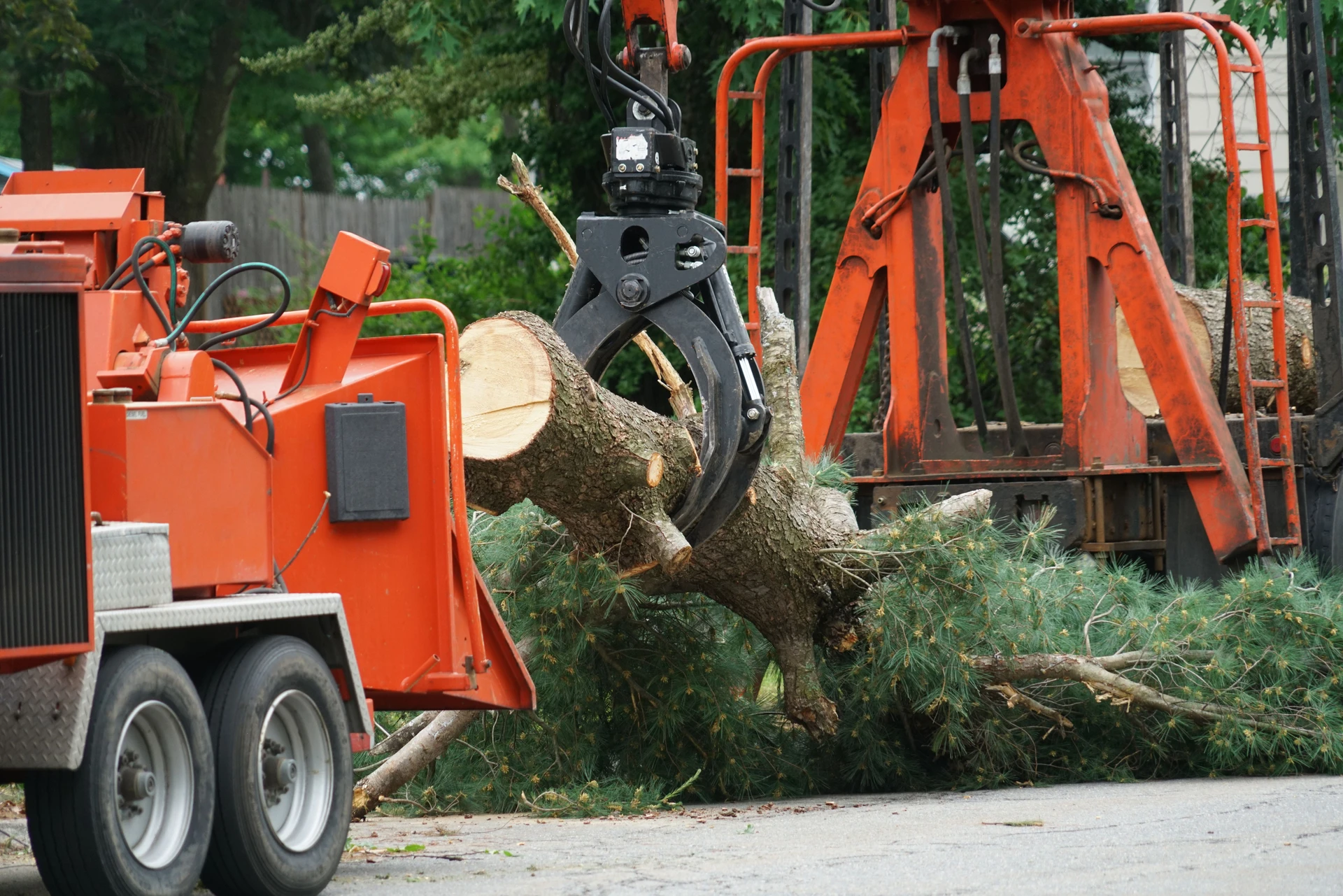
- Sectional cutting and clearing. The crew cuts the trunk into manageable sections, relieving stored tension in a controlled order, and clears the driveway path first so access is restored as early as possible.
- Debris removal and site cleanup. Brush is chipped, logs are hauled or stacked as you prefer, and the driveway is raked clear of debris that could puncture a tire.
Emergency Versus Scheduled Removal: What Actually Differs
| Factor | Emergency Tree Removal | Scheduled Tree Removal |
|---|---|---|
| Typical response | Hours, often same day | Days to weeks out |
| Availability | 24/7 including nights and weekends | Standard business hours |
| Pricing | Higher, reflects after hours crew and urgency | Standard rate, often quoted in advance |
| Trigger | Fallen tree, blocked access, storm damage, active hazard | Dead, declining, or unwanted healthy tree |
| Planning | Assessed on arrival, conditions unknown until crew is on site | Full site walk, written estimate, scheduled date |
| Equipment | Whatever the hazard requires, dispatched on description | Matched precisely to the job in advance |
| Insurance | Frequently claim eligible when property is damaged | Rarely covered, treated as maintenance |
If the tree is down and nothing is damaged or blocked, you almost always save money by scheduling the removal for normal hours instead of paying emergency rates.
Pros and Cons of Calling for Same Day Tree Removal
Pros
- Access to your home and vehicles is restored quickly
- Prevents a leaning or partially fallen tree from causing more damage
- Removes trip, fall, and vehicle hazards from the driveway
- Documentation and timeline support a stronger insurance claim
- A licensed crew carries the liability instead of you
Cons
- Costs more than a scheduled appointment
- Demand spikes after regional storms, so wait times can stretch
- Full estimate is not always possible until the crew is on site
- Stump grinding and grading are usually separate follow up visits
Do and Don’t: The First Hour
Do
- Park remaining vehicles well clear of the tree and any leaning branches
- Assume every wire is live, including cable and phone lines
- Call your insurance carrier to open a claim and ask what documentation they need
- Ask any contractor for proof of liability and workers compensation coverage
- Keep a written record of who you called and when
Don’t
- Don’t try to cut a fallen tree yourself with a homeowner chainsaw. Trunks under tension are the leading cause of serious chainsaw injury, and the Tree Care Industry Association consistently flags storm cleanup as the highest risk work in the trade.
- Don’t move debris off your vehicle before photographing it
- Don’t let a door knocking crew start work without a written scope and price
- Don’t walk under a hung up limb, no matter how stable it looks
What Emergency Tree Removal Costs and Why It Varies
There is no single national number, and any company that quotes you one sight unseen is guessing. Emergency tree removal cost is driven by a handful of concrete variables.
Trunk diameter and total height set the baseline. Access is the next biggest factor, because a tree a truck can reach costs far less to clear than one behind a fence with no equipment path. Whether a crane is required, whether the tree is under tension, and whether the work happens at 2 a.m. or 2 p.m. all move the number.
Hazardous tree removal near a structure, a pool, or a utility service costs more than the same tree in an open yard, because the work has to be done in small controlled sections rather than felled in one piece.
If your homeowners policy covers the damage, ask whether removal is included or capped separately. Many policies contribute toward debris removal when a tree damages a covered structure, and much less when it simply falls in the yard. The Insurance Information Institute publishes plain language guidance on how these clauses typically work.
A Real World Scenario
A homeowner in Bucks County wakes up after a summer storm to find a large silver maple across the driveway, the crown resting on a split rail fence and the root plate lifted about two feet. No wires are involved. Her car is parked behind the tree.
She photographs the scene from the street, the porch, and both sides of the trunk before touching anything, then calls for storm damage tree removal. The crew arrives that morning, confirms the root plate is stable, and starts by clearing the driveway lane rather than the fence, because access is the priority. Her car is out by early afternoon. The fence and the remaining brush are handled the same day, and stump grinding is scheduled for the following week as a separate visit.
The photos she took before cleanup are what let her carrier process the fence claim without a second inspection.
Who To Call When a Tree Falls On Your House
The order matters. If anyone is hurt, or the structure is visibly compromised, call 911. If wires are involved, call the utility. Then call your insurance carrier to open a claim, and a licensed tree service for the removal itself.
Ask three questions before anyone climbs on a roof: Are you licensed and insured, can I see the certificate, and do you have an ISA Certified Arborist on the crew. The International Society of Arboriculture maintains the certification standard, and a certified arborist is trained to assess tree structure and failure risk rather than just cut wood.
Quick Answers:
How fast can a crew clear a tree from my driveway?
A: Most driveway clearings are completed the same day, often within a few hours of arrival. Regional storms that hit many homes at once can extend that window.
Is emergency tree removal covered by insurance?
A: Often yes when the tree damages a covered structure such as your house, garage, or fence. Coverage for a tree that falls in open yard space is much more limited.
Can I cut the tree up myself to save money?
A: It is strongly discouraged. Fallen trunks hold stored tension that releases unpredictably, and chainsaw kickback injuries during storm cleanup are common and severe.
What if the tree fell from my neighbor’s yard?
A: In most cases your own policy handles damage to your property regardless of where the tree originated. Liability shifts only if the tree was documented as dead or hazardous beforehand.
Do I need the stump removed at the same time?
A: No. Stump grinding is normally a separate visit with different equipment and is not part of clearing an access emergency.
What counts as a true emergency?
A: Anything blocking access, touching a structure, leaning toward one, or involving wires. A dead tree standing safely in the back yard does not qualify. Learn more about the true emergency indicators.
Will you work at night or on holidays?
A: Genuine 24/7 emergency tree cutting service operates around the clock, though after hours rates apply.
How do I verify a company is legitimate?
A: Ask for a certificate of insurance naming liability and workers compensation, confirm licensing, and check for ISA certified staff.
Glossary of Terms
- Root Plate — The mass of roots and soil that lifts out of the ground when a tree tips over. A shifting root plate means the tree is still unstable.
- Sectional Removal — Taking a tree down in small pieces from the top or along the trunk instead of felling it whole, used when there is no safe drop zone.
- ISA Certified Arborist — A tree care professional credentialed by the International Society of Arboriculture through testing and continuing education in tree biology and safety.
- Hung Up Limb — A broken branch caught in the canopy rather than fallen to the ground. It can drop without warning and is one of the most dangerous conditions on a storm site.

Conclusion
A tree across your driveway does not have to derail your entire week. The homeowners who get through it fastest are the ones who follow the same order every time: clear the area, rule out wires, document the scene, then bring in a licensed crew that can assess structure before it starts cutting.
Emergency tree removal is not just faster service. It is a different kind of work, done by people trained to read tension in a trunk and take weight off a structure in a controlled sequence. That training is what keeps a bad morning from becoming a much worse one.
If a tree is blocking your driveway right now, call for a free written estimate and get a crew dispatched today. Our ISA Certified Arborists have served Bucks County since 2001, we are fully licensed and insured, and our emergency line is answered 24 hours a day.