Key Takeaways
- Emergency tree removal deals with immediate danger; standard removal is scheduled weeks in advance.
- A tree on your house, driveway, or power line almost always qualifies as an emergency.
- Emergency work typically costs more due to after-hours crews and specialized equipment.
- Homeowners insurance often covers storm damage tree removal when a structure is hit.
- Never touch a tree tangled in power lines; call the utility company first.
- Standard removal is the smarter, cheaper choice for dead or declining trees that pose no immediate threat.

When a tree comes down in a storm, most homeowners face the situation for the first time with no idea who to call or what it will cost. Understanding the difference between emergency tree removal and standard tree removal helps you make the right call quickly, avoid overpaying, and stay safe while you wait for help.
This guide explains what qualifies as a true tree emergency, how the two services differ in response time, cost, and process, and exactly what to do in the first hour after a tree falls on your house. You will also find a cost comparison table, a step-by-step action plan, and answers to the questions homeowners ask most.
What Counts as Emergency Tree Removal?
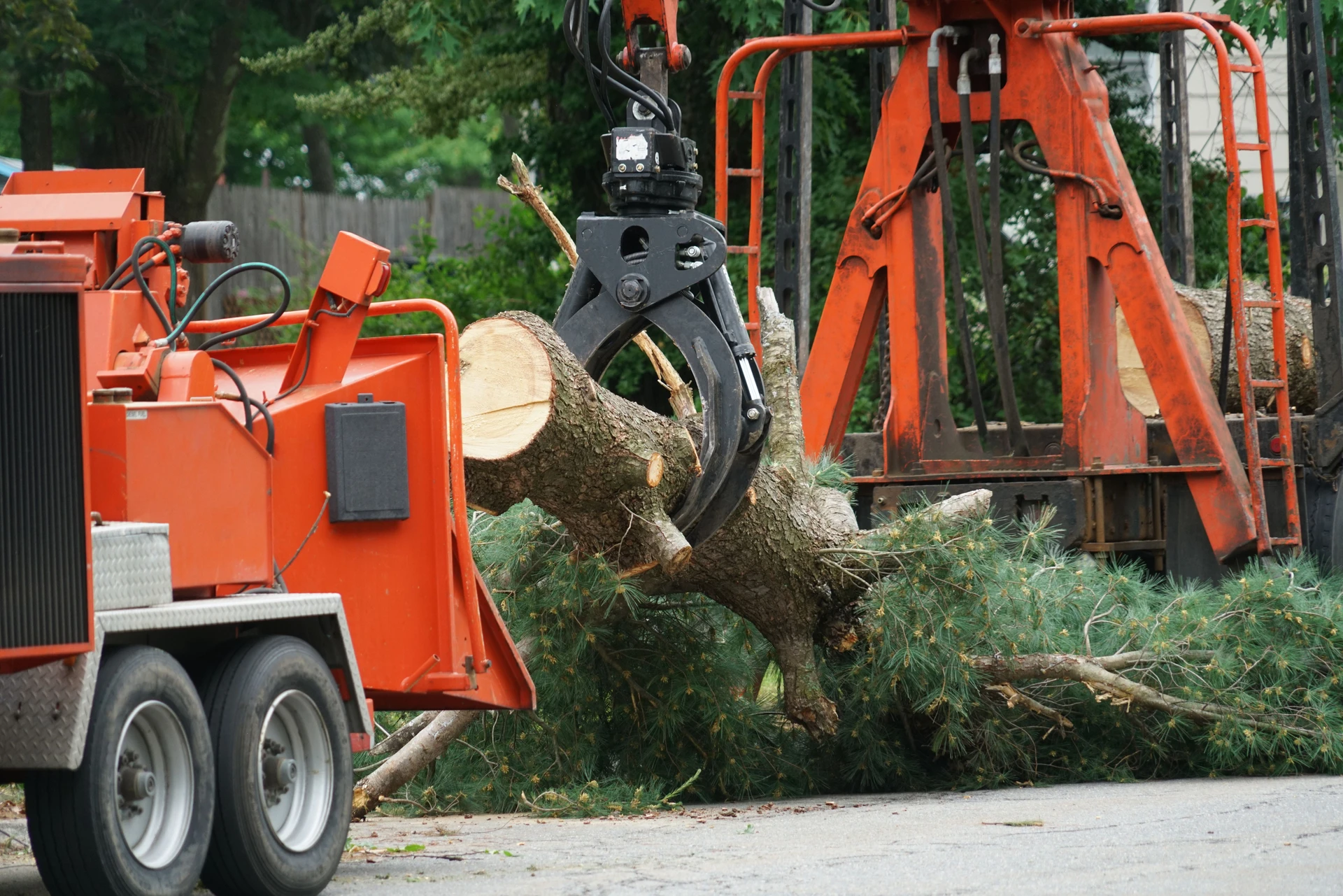
Emergency tree removal is any tree work that cannot wait without putting people or property at risk. An emergency tree cutting service operates outside normal scheduling, often with 24/7 availability and same day tree removal crews.
Common situations that qualify:
- A tree or large limb has fallen on a house, garage, vehicle, or fence
- A storm-damaged tree is leaning toward a structure or over a walkway
- A tree is entangled in power lines or has pulled down service wires
- A split trunk or hanging limb (“widow-maker”) is suspended above an active area
- A tree is blocking a driveway, road, or emergency access route
The common thread is imminent risk. If the tree can fail, or fail further, before a normal appointment window opens, it is an emergency.
What Counts as Standard Tree Removal?
Standard tree removal is planned work on a tree that poses no immediate threat. Typical examples include removing a dead tree in the back corner of a lot, clearing space for a construction project, or taking out a declining tree before it becomes hazardous.
Because there is no urgency, standard removal is scheduled days or weeks out, quoted after an on-site assessment, and performed during regular business hours. That flexibility is exactly why it costs less.
Emergency vs. Standard Tree Removal: Side-by-Side Comparison
| Factor | Emergency Tree Removal | Standard Tree Removal |
|---|---|---|
| Response time | Same day, often within hours | Scheduled days to weeks out |
| Availability | 24/7, including nights, weekends, storms | Regular business hours |
| Typical trigger | Fallen or failing tree threatening people or property | Dead, declining, or unwanted tree with no immediate risk |
| Assessment | Rapid on-site hazard evaluation | Full quote and planned approach |
| Equipment | Cranes, lifts, rigging for trees on structures | Standard climbing and felling equipment |
| Cost | Higher due to urgency, after-hours labor, and complexity | Lower, competitive quoted pricing |
| Insurance | Often covered when a structure is damaged | Rarely covered; considered maintenance |
| Crew conditions | Unstable trees, storm debris, compromised structures | Controlled, predictable work site |
Why Emergency Tree Removal Costs More
Emergency tree removal cost runs higher than standard removal for reasons that go beyond urgency pricing:
- After-hours labor. Crews called out at 2 a.m. during a storm are paid accordingly.
- Unstable conditions. A tree resting on a roof is under tension and can shift unpredictably, which demands slower, more technical work.
- Specialized equipment. Tree on house removal frequently requires a crane to lift sections off the structure without causing further damage.
- Risk premium. Hazardous tree removal near power lines or compromised structures carries real danger for the crew.
Industry experts suggest emergency jobs can run significantly higher than an equivalent standard removal, with crane-assisted work at the top of the range. The exact figure depends on tree size, access, and how the tree is positioned.
If cost is a concern and the tree is damaged but stable, ask the arborist whether the job can be downgraded to priority scheduling instead of a full emergency call-out. If the tree is on your house or blocking your only exit, do not wait on price shopping; secure the scene and get a crew out.
Who to Call When a Tree Falls on Your House: Step-by-Step
If you are wondering who to call when a tree falls on your house, follow this order:
- Get everyone out and away. Evacuate the affected rooms and keep people and pets clear of the tree and any sagging structure.
- Call 911 if there is structural damage, gas smell, or downed lines. Safety services come before any contractor.
- Call your utility company if power lines are involved. Only utility crews may work on or near energized lines.
- Contact a 24/7 emergency tree removal company. Describe the situation clearly: tree size, what it is resting on, and whether it is still moving.
- Call your homeowners insurance company. Many policies cover fallen tree removal when a structure is damaged. Ask about documentation requirements before cleanup begins.
- Photograph everything. Take wide shots and close-ups of the tree, the damage, and the surrounding area for your claim.
- Arrange temporary protection. Once the tree is removed, tarp the roof or board openings to prevent water damage.
Do and Don’t: The First Hour After a Tree Falls
Do:
- Keep a wide perimeter around the tree, especially in wind
- Shut off gas and electricity if the structure is damaged and it is safe to reach the controls
- Document damage with photos and video before anything is moved
- Ask the tree company whether they bill insurance directly
Don’t:
- Don’t approach a tree touching power lines, even if the lines look dead
- Don’t climb onto the roof to assess damage yourself
- Don’t attempt DIY cutting on a tree under tension; stored energy in bent trunks and limbs causes serious chainsaw injuries
- Don’t sign a contract with a door-knocking “storm chaser” crew without verifying insurance and credentials
Pros and Cons of Each Service
Emergency tree removal
Pros:
- Immediate protection of people and property
- Prevents secondary damage like water intrusion through a breached roof
- Often insurance-eligible when a structure is involved
- Crews trained and equipped for hazardous tree removal
Cons:
- Higher cost, especially nights and weekends
- Less time to compare quotes
- Storm surges can stretch response times in hard-hit areas
Standard tree removal
Pros:
- Lower, competitive pricing with time to gather multiple quotes
- Work planned around your schedule and property
- Full assessment allows for stump grinding and cleanup to be bundled
Cons:
- Wait times of days to weeks
- A deteriorating tree can become an emergency while you wait
- Rarely covered by insurance
Here is the practical rule: if a tree has already failed or is actively failing, choose emergency service. If a tree is dead or declining but stable, choose standard removal now, before the next storm makes the decision for you.
Real-World Scenario
A homeowner in a coastal Florida town hears a crack during an overnight thunderstorm and finds a mature oak resting on the corner of the roof, with limbs pressed against a second-story window. She moves her family to the far side of the house, calls 911 to confirm no gas or electrical hazard, then reaches a 24/7 tree service around 3 a.m.
The crew arrives at first light with a crane, lifts the canopy off the roof in sections over four hours, and tarps the breach. Her insurer covers most of the removal and roof repair because the tree struck the structure. Had the same oak fallen in the open yard, removal would likely have been billed as standard work at a fraction of the cost, and largely out of pocket. The position of the tree, not the storm itself, determined both the urgency and the coverage.
How to Avoid Needing Emergency Removal
Most tree emergencies announce themselves through a handful of warning signs you need emergency tree removal that are visible months or years in advance. The International Society of Arboriculture recommends periodic inspections of mature trees, especially after major weather events. Watch for:
- Dead or hanging limbs in the upper canopy
- Fungal growth or cavities at the base of the trunk
- Cracks, splits, or included bark where stems join
- A new or worsening lean, or lifted soil on one side of the root zone
If you spot these signs, schedule a standard assessment. Removing or cabling a hazardous tree on your terms is always cheaper and safer than storm damage tree removal on the tree’s terms.
Quick Answers –
What qualifies as an emergency tree removal?
A: Any fallen or failing tree that poses an immediate threat to people, structures, vehicles, or access routes. If waiting increases the risk, it is an emergency.
Who do I call first when a tree falls on my house?
A: Call 911 if anyone is hurt or the structure is badly damaged, then the utility company if lines are involved, then an emergency tree service, then your insurer.
Does homeowners insurance cover emergency tree removal?
A: Often, yes. According to the Insurance Information Institute, policies typically cover removal when the tree damages a covered structure like your house, garage, or fence. Trees that fall in the open yard without hitting anything are usually not covered.
How fast can an emergency tree service arrive?
A: Many companies offer same day tree removal and respond within hours, though response times stretch after widespread storms when demand spikes.
How much more does emergency tree removal cost?
A: It varies with tree size, access, and equipment needs, but emergency and crane-assisted jobs generally cost meaningfully more than a scheduled removal of the same tree.
Can I cut up a fallen tree myself?
A: Small limbs on open ground, possibly. Anything on a structure, under tension, or near lines should be left to professionals; trees under load are a leading cause of serious chainsaw injuries.
Is a leaning tree an emergency?
A: A sudden new lean, especially with lifted soil at the roots, is an emergency. A tree that has leaned the same way for years is usually a candidate for standard assessment.
What if the tree fell from my neighbor’s yard?
A: In most states, the owner of the damaged property files with their own insurer regardless of where the tree grew. Your insurer may pursue the neighbor if negligence was involved.
Glossary of Terms
Hazardous tree: A tree with structural defects likely to cause failure near a target such as a building, vehicle, or walkway.
Widow-maker: A broken limb hanging loosely in a tree’s canopy that can fall without warning.
Crane-assisted removal: A removal method where a crane lifts cut sections of a tree away from structures instead of dropping them.
Certified arborist: A tree care professional credentialed by the International Society of Arboriculture through examination and continuing education.

Conclusion
The difference between emergency tree removal and standard tree removal comes down to one question: can this wait? A tree on your house, over a power line, or hanging above a walkway cannot. A dead tree standing quietly in the yard can, but not forever.
Knowing who to call, what insurance typically covers, and how the pricing works puts you in control of a stressful situation. Better yet, regular inspections let you handle most trees as affordable scheduled work instead of a 3 a.m. crisis.
If a tree is threatening your home right now, don’t wait. Call our 24/7 emergency tree removal line and get a certified crew on the way today.