Key Takeaways
- 24 hour tree removal Bucks County typically starts with a phone assessment before a crew is dispatched.
- Trees touching power lines are a utility company job first, never a homeowner job.
- Emergency removal costs more than scheduled removal because of after-hours labor and equipment.
- Your homeowners insurance often covers removal when a tree damages an insured structure.
- Never stand under, cut, or pull a fallen tree that is under tension.
- Photos taken before cleanup make insurance claims far smoother.
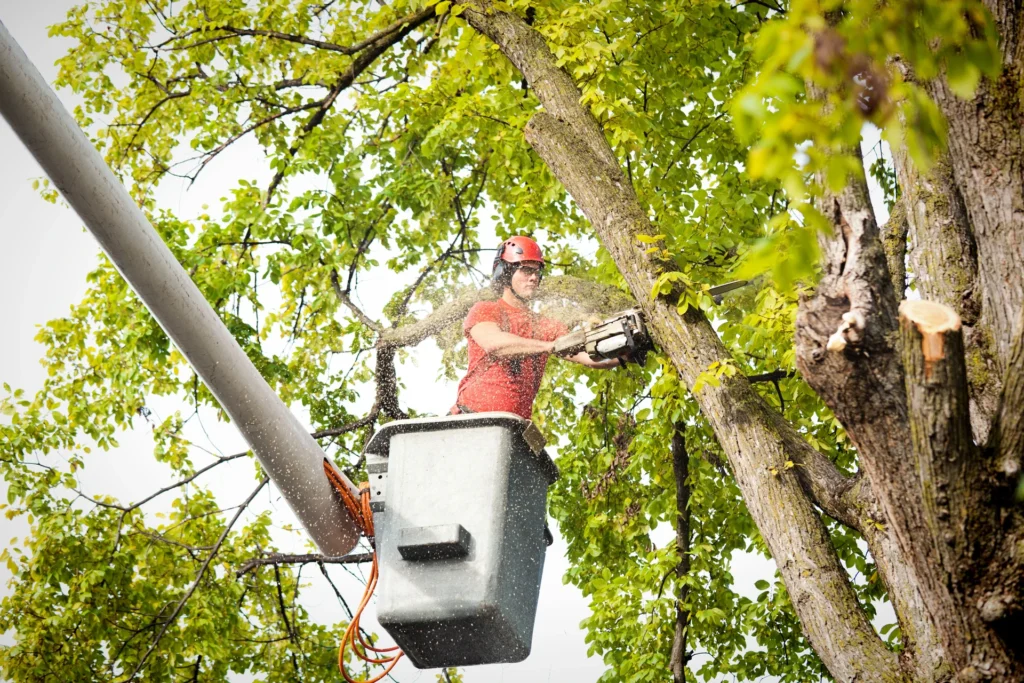
A tree does not wait for business hours to fall. In Bucks County, most emergency calls come in during or right after storms, often late at night, when a trunk has split over a driveway or a limb has punched through a roof. That is exactly the situation 24 hour tree removal in Bucks County exists for.
This guide walks you through how the emergency process actually works, from the first phone call to the final haul-away. You will learn what crews do on arrival, what affects the price, when insurance pays, and what you should and should not do while you wait. By the end, you will know how to handle a fallen tree calmly instead of guessing in the dark.
What Counts as a Tree Emergency?
Not every downed limb needs a midnight crew, and there are clear warning signs that separate a true emergency from a next-day job. A true emergency involves an immediate risk to people, structures, vehicles, or access. Common examples across Doylestown, Newtown, Warminster, and the rest of Bucks County include:
- A tree that fell on your house or garage, especially with roof penetration or structural damage
- A trunk or large limb blocking a driveway, private road, or entrance
- A leaning tree with lifted roots after saturated soil or high winds
- A cracked or “hung up” limb suspended over a walkway, deck, or play area
- Storm damage tree removal needs after severe weather moves through Doylestown PA and surrounding townships
If a tree fell in the back corner of your yard and touches nothing, that is usually a next-day job, not an emergency. If the tree is touching a structure, a vehicle, or a utility line, treat it as an emergency. If it fell in open space with no target underneath, you can safely wait for daylight and standard pricing.
One hard rule: if any part of the tree contacts a power line, call your utility provider (PECO for most of Bucks County) before anyone touches it. Reputable tree crews will not work on an energized tree, and neither should you. The Occupational Safety and Health Administration (OSHA) treats line-contact tree work as one of the most dangerous jobs in the industry for good reason.
How 24-Hour Tree Removal Works, Step by Step
Emergency tree cutting service in Bucks County follows a fairly consistent playbook. Here is what happens after you dial the phone.
- The emergency call and phone triage. You describe what fell, where it landed, and whether anyone is hurt or lines are involved. The dispatcher decides whether this is a life-safety situation (call 911 first), a utility situation, or a tree crew situation.
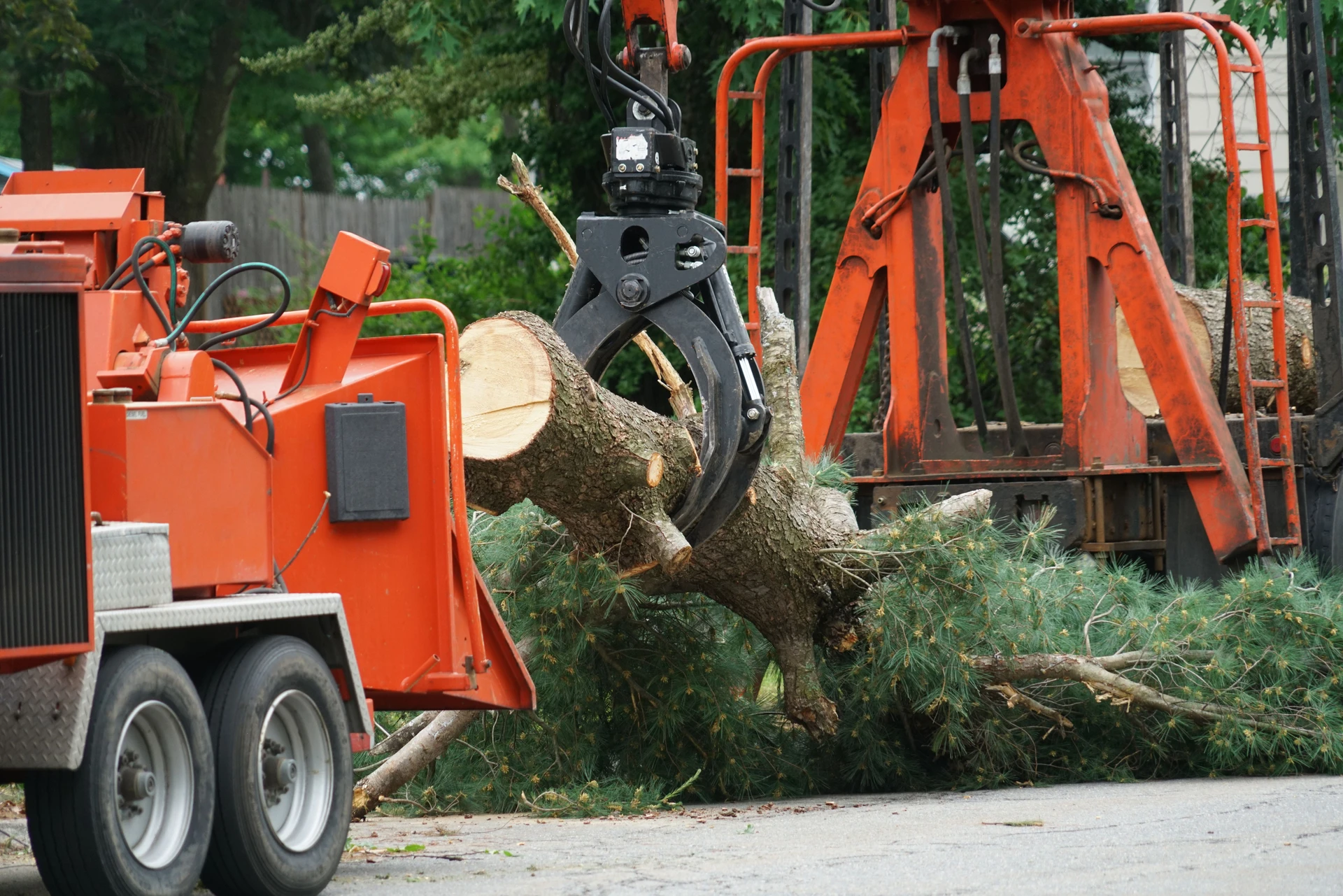
- Photo or video assessment. Many companies ask for a few phone photos. This tells the crew what equipment to load: a crane for a tree on a house, a grapple truck for a road blockage, or climbing gear for a hung limb.
- Dispatch and arrival. Crews prioritize by hazard level. A tree through a bedroom roof gets bumped ahead of a blocked driveway.
- Scene assessment and securing the area. On arrival, the crew walks the site, checks for hidden tension in the wood, looks for line contact, and ropes off the work zone.
- Stabilization before removal. A tree on a house is rarely lifted off in one piece. Crews relieve pressure points first so the tree does not shift and cause more damage.
- Sectional removal. The tree comes apart in controlled pieces, often rigged with ropes or lifted by crane, working from the outer limbs toward the trunk.
- Temporary protection and cleanup. If the roof is opened up, crews or a partnering contractor tarp the hole. Debris is hauled or staged depending on what you agreed to.
- Documentation. Good companies photograph the damage and the work for your insurance claim and provide an itemized invoice.
The whole process, from call to a cleared hazard, often finishes within hours for straightforward jobs. Complex crane removals over a house can take longer and may pause until daylight if working at night would be unsafe.
Emergency vs. Scheduled Tree Removal: What Is Different?
| Factor | 24-Hour Emergency Removal | Scheduled Removal |
|---|---|---|
| Response time | Same day, often within hours | Days to weeks out |
| Pricing | Premium for after-hours labor and rapid dispatch | Standard rates, room to compare quotes |
| Scope | Hazard mitigation first, full cleanup may come later | Complete removal, stump grinding, full cleanup in one visit |
| Equipment | Whatever resolves the hazard fastest, cranes common | Chosen for efficiency and cost |
| Insurance involvement | Frequent, especially with structural damage | Rare |
| Assessment | Rapid phone/photo triage | On-site written estimate |
The practical takeaway: if there is no active hazard, waiting for a scheduled slot almost always saves money. If there is an active hazard, the premium buys you speed, safety, and damage control.
Pros and Cons of Calling a 24-Hour Crew
Pros
- Immediate hazard reduction, which limits further damage to your home
- Professional rigging prevents the tree from shifting mid-removal
- Documentation that supports your insurance claim
- Access to cranes and equipment homeowners cannot rent safely
- One call handles cutting, hauling, and often roof tarping
Cons
- After-hours rates are meaningfully higher than scheduled work
- Nighttime conditions can limit what crews will safely attempt
- Demand spikes after regional storms, so response times stretch
- Stump grinding and fine cleanup usually require a follow-up visit
What Should You Do While You Wait?
Do
- Get everyone out of rooms under the damaged section of roof
- Take wide and close-up photos before anything is moved
- Shut off electricity to affected rooms if wiring may be damaged
- Move vehicles and valuables away from the tree if it is safe to reach them
- Call your insurance company’s claims line to open a claim early
Don’t
- Don’t cut any part of the tree yourself, even small limbs
- Don’t walk under a leaning tree or a suspended limb
- Don’t touch a tree that is anywhere near a power line
- Don’t climb onto the roof to inspect damage
- Don’t sign a full-price contract from a door-knocking crew after a storm without checking credentials
Wood under tension behaves unpredictably. A trunk resting on a roof edge can store enormous spring-loaded force, and a single cut in the wrong place releases it instantly. This is the single most common way homeowners get hurt after a storm, and it is entirely avoidable by waiting for a trained crew.
What Does Emergency Tree Removal Cost in Bucks County?
Exact numbers depend on size, location, access, and equipment, so be wary of anyone quoting a firm price sight unseen. That said, the cost drivers are consistent:
- Tree size and species. A large oak over a house is a different job than a snapped ornamental pear.
- What it landed on. Tree on house removal in Bucks County usually requires a crane and careful rigging, which raises the price.
- Access. A backyard tree behind a fence with no equipment access takes more labor hours.
- Timing. True middle-of-the-night dispatch carries an after-hours premium. Some “emergencies” can wait until 7 a.m. and be billed closer to standard rates.
- Cleanup level. Hazard removal only, versus haul-away, versus stump grinding later.
When homeowners search for emergency tree removal cost in Doylestown PA, the honest answer is a range, and the range narrows the moment a crew sees photos. If budget is your main concern and the tree poses no immediate danger, ask the company whether the job can be scheduled as same day tree removal in Doylestown PA at daytime rates rather than dispatched as a night emergency. That one question can save a significant amount.
Does Insurance Cover It?
Often, yes, but with conditions. According to the Insurance Information Institute, standard homeowners policies generally cover tree removal when the tree damages an insured structure, such as your house, garage, or fence, and the cause is a covered peril like wind. Coverage for a tree that falls harmlessly in the yard is much more limited, and neighbor-tree situations depend on where the tree stood and whether negligence was involved.
Two things strengthen almost every claim: photos taken before cleanup begins, and an itemized invoice from the removal company. Ask for both.
A Real-World Scenario
A summer thunderstorm drops a mature silver maple across the back corner of a two-story colonial at 11 p.m. The homeowner calls a 24-hour line, sends four photos, and the dispatcher identifies roof penetration over an unoccupied bonus room.
A crew arrives within two hours, ropes off the yard, and removes the canopy limbs by rope rigging to take weight off the roof. The main trunk stays in place overnight because a crane cannot be safely positioned in the dark. At first light, a crane lifts the trunk in three sections, the crew tarps the roof opening, and the homeowner’s insurer receives photos and an itemized invoice the same day. Total elapsed time from call to cleared roof: about twelve hours, with the immediate hazard neutralized in the first two.
This staged approach is typical. Hazardous tree removal in Doylestown PA is about controlling risk in the right order, not raw speed.
How to Choose the Right Emergency Crew
If you need fast help, choose a company that can prove three things: insurance, competence, and local presence.
- Ask for proof of liability and workers’ compensation insurance. If an uninsured worker is injured on your property, the liability can land on you.
- Look for industry credentials. Membership in the Tree Care Industry Association (TCIA) or an ISA Certified Arborist on staff signals real training. You can verify any arborist’s credentials at TreesAreGood.org, the ISA’s consumer site.
- Prefer established local companies. After major storms, out-of-area “storm chasers” canvass Bucks County neighborhoods. Some are legitimate. Many are not insured, and a few take deposits and disappear.
If two companies quote similar prices, choose the one that documents its work and communicates clearly by phone. That difference matters most when insurance is involved.
Quick Answers –
Who should I call first when a tree falls on my house?
A: Call 911 if anyone is hurt or wires are down. Otherwise call a 24-hour tree removal company, then your insurance carrier to open a claim.
Who do you call when a tree falls on your house but touches power lines?
A: Call your utility company first. In most of Bucks County that is PECO. Tree crews cannot legally or safely work on an energized tree.
How fast can a crew arrive?
A: For genuine hazards, many Bucks County crews arrive within a few hours. After widespread storms, response times stretch because demand spikes county-wide.
Is fallen tree removal in Doylestown more expensive at night?
A: yes. After-hours dispatch carries a labor premium. If the tree poses no active danger, ask about first-thing-in-the-morning service at standard rates.
Will insurance pay for emergency tree removal?
A: Typically yes when the tree damaged an insured structure through a covered peril like wind. A tree that falls in open yard space has much more limited coverage.
Can I cut up the tree myself once it is off the house?
A: It is not recommended. Storm-fallen wood holds tension that releases violently when cut. Leave anything larger than small branches to a trained crew.
Do emergency crews remove the stump too?
A: Rarely in the same visit. Emergency work focuses on the hazard. Stump grinding is usually scheduled as a follow-up at standard rates.
Does Bucks County or my township remove fallen trees?
A: Only when the tree blocks a public road or fell from public property. Trees on private property are the owner’s responsibility.
What if my neighbor’s tree fell on my property?
A: In most cases your own insurance handles damage on your side, regardless of where the tree stood, unless the neighbor was previously notified the tree was hazardous.
Glossary of Terms
Hazard tree: A tree with structural defects, such as a split trunk or lifted roots, that make it likely to fail and hit a target like a house or walkway.
Rigging: The use of ropes, pulleys, and anchors to lower cut tree sections in a controlled way instead of letting them free-fall.
Sectional removal: Taking a tree down in pieces from the top or outer limbs inward, standard practice when a tree is on or near a structure.
Widow-maker: A broken limb hanging loosely in the canopy that can drop without warning, one of the most dangerous post-storm hazards.

Conclusion
Emergency tree work rewards preparation. When you know that 24 hour tree removal in Bucks County starts with a phone assessment, prioritizes stabilization over speed, and pairs naturally with an insurance claim, a fallen tree becomes a manageable problem instead of a panic. Keep people away from the tree, photograph everything, call the utility if lines are involved, and get a trained crew on the way.
If a tree is down on your property right now, or you have a leaning tree you do not trust before the next storm, call our 24-hour line and send a few photos. We will tell you honestly whether it needs an emergency crew tonight or a scheduled visit tomorrow.